
Play Killer Sudoku Online Free - Daily Cage Sum Puzzle
More Sudoku Puzzles
What Is Killer Sudoku?
Killer Sudoku combines classic Sudoku rules with arithmetic constraints. At its core, it follows the same three fundamental rules as standard Sudoku:
Each row contains every digit exactly once
Each column contains every digit exactly once
Each box contains every digit exactly once
What makes Killer Sudoku different is the addition of cages.
A cage is a group of cells marked with a target total. The digits inside that cage:
Must add up to the cage's number
May not repeat inside the same cage
That "no repeated digits inside a cage" rule is not optional. It is the rule that turns Killer Sudoku from simple arithmetic into a deep logical puzzle.
How Killer Sudoku Is Different from Standard Sudoku
In standard Sudoku, logic comes entirely from rows, columns, and boxes.
Killer Sudoku adds a fourth constraint layer: local arithmetic with strict uniqueness. This creates two major differences:
You often know what cannot appear in a cage long before you know exact placements
Eliminating combinations becomes more powerful than placing numbers
As a result, Killer Sudoku rewards planning and deduction over step-by-step filling.
Understanding Killer Sudoku Cages
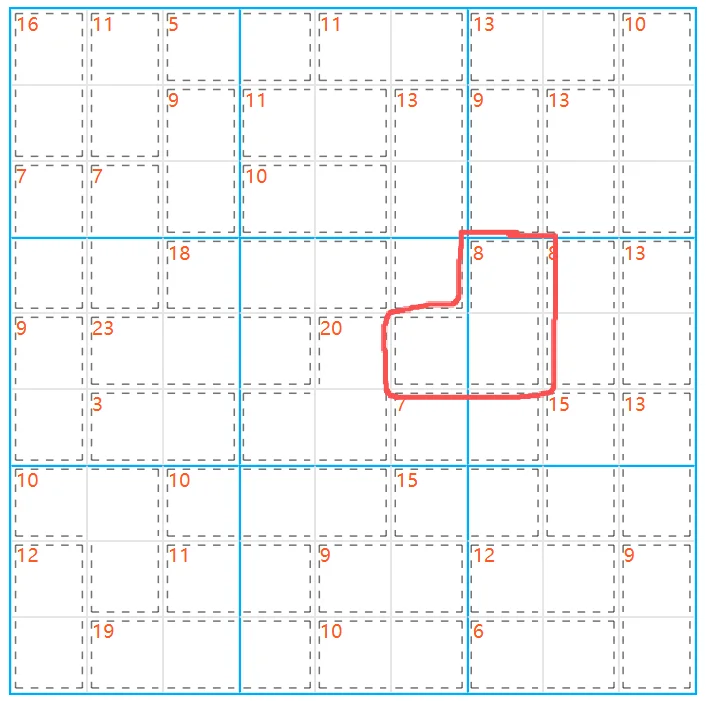
Without the no-repeat rule, a cage sum would allow dozens of combinations. With it, many cages collapse into only one or two valid digit sets. This is where real Killer Sudoku logic begins.
Killer Sudoku Solving Tips and Strategies
1. Find Single-Cell Cages (Immediate Values)
Before thinking about combinations or totals, always scan for this first. If a cage contains only one cell, that digit is fixed. A cage sum of 7 means the cell is 7. These cells behave exactly like givens in standard Sudoku.
2. Fixed Cage Combinations
Because digits in a cage cannot repeat, many cage sums have only one possible digit set.
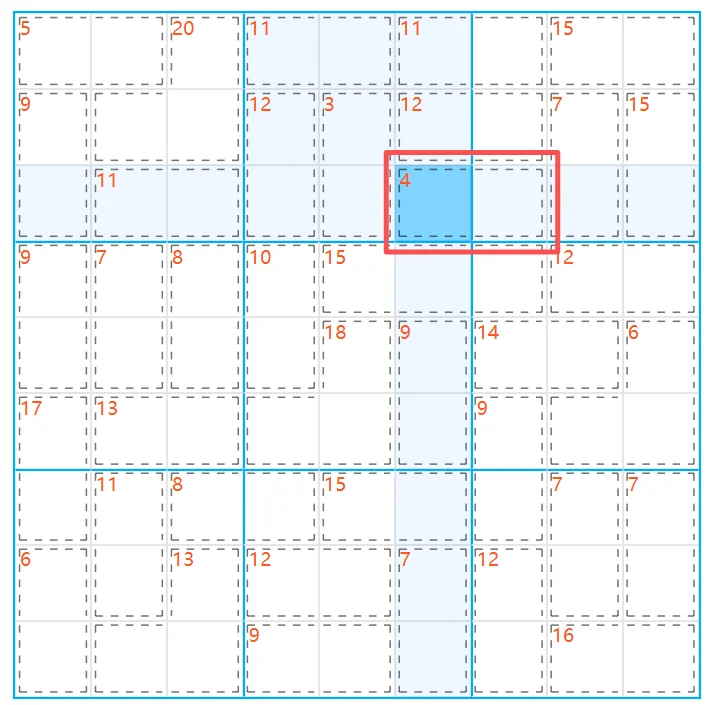
Once a cage is locked to a specific digit set, those digits cannot appear elsewhere in the same row, column, or box. Many surrounding cells instantly lose candidates.
More examples:
2-cell cage summing to 17 → must be {8, 9}
3-cell cage summing to 6 → must be {1, 2, 3}
3-cell cage summing to 24 → must be {7, 8, 9}
3. Using Row, Column, and Box Totals
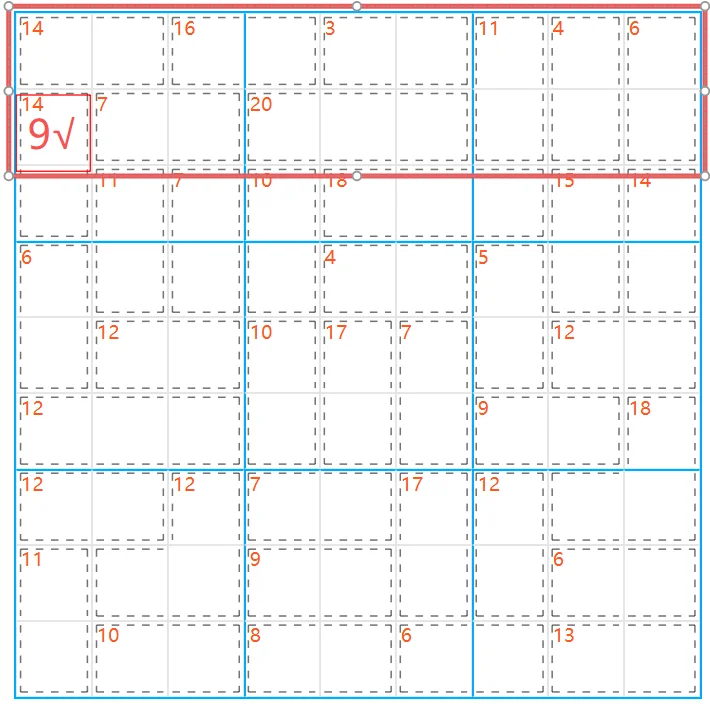
Every valid Sudoku grid has fixed totals:
4×4: each row/column/box sums to 10 (1+2+3+4)
6×6: each row/column/box sums to 21 (1+2+3+4+5+6)
9×9: each row/column/box sums to 45 (1+2+...+9)
Almost-Full Rows and Columns
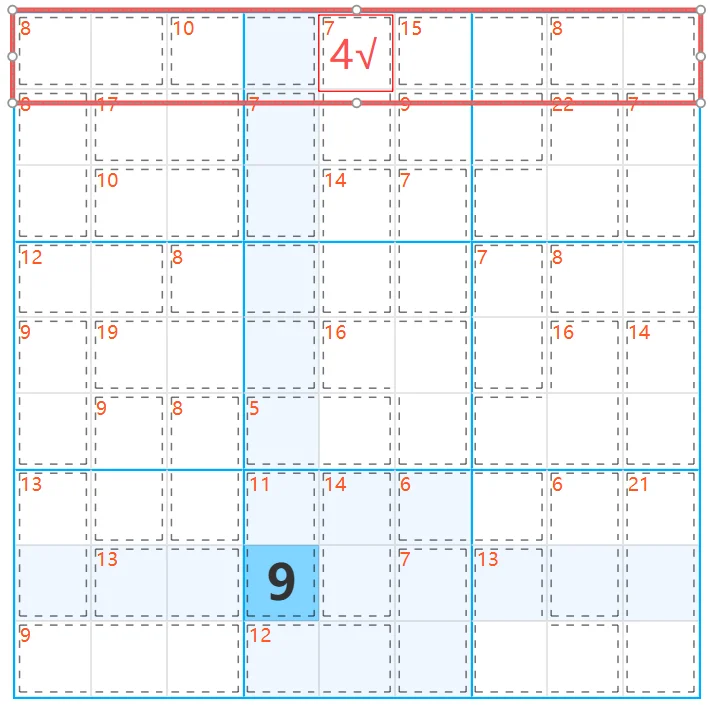
Boxes Are Often Even Stronger
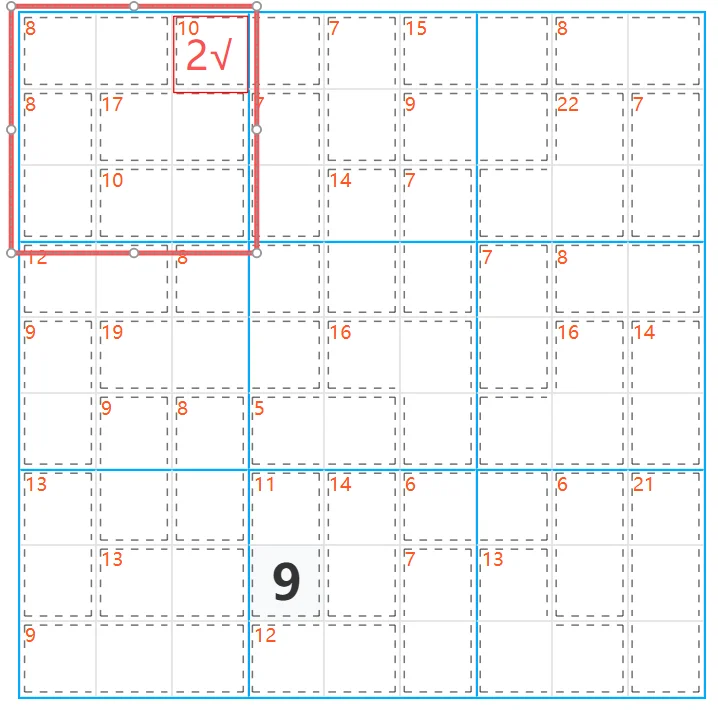
Combining Multiple Rows, Columns, or Boxes
Killer Sudoku FAQs
Do digits repeat inside a cage?
No. Digits inside the same cage must all be different, even if they are in different rows, columns, or boxes. This rule is fundamental.
Are single-cell cages always safe to fill?
Yes. A one-cell cage represents a confirmed digit, just like a given in standard Sudoku.
Can I use standard Sudoku techniques in Killer Sudoku?
Yes. Naked Singles, Hidden Singles, and pairs still apply. However, Killer Sudoku puzzles are usually designed so that cage logic creates the progress, and standard techniques finish the puzzle.
Is Killer Sudoku solvable without guessing?
Absolutely. Well-designed Killer Sudoku puzzles are fully logical. If guessing feels necessary, it usually means a cage combination was overlooked or a total-based deduction was missed.
Which grid size should I start with?
4×4: learn cage logic safely
6×6: best balance of arithmetic and logic
9×9: full Killer Sudoku experience