
Blog
Explore the iQiQGame blog for brain training tips, cognitive science insights, game guides, and mental fitness advice. Stay updated with the latest research on brain health, memory improvement, and cognitive development.

Game Guides & Tips
Step-by-step guides, tips, and strategies for all iQiQGame games, including sudoku variants, number puzzles, and classic logic games.
Explore →
Brain Training & Cognitive Science
Science-based brain training methods and cognitive science insights to improve memory, attention, and mental fitness.
Explore →
IQ & EQ Insights
IQ and EQ insights: test prep, question breakdowns, score interpretation, and emotional intelligence training.
Explore →
Game News & Trends
Latest iQiQGame game releases, trending puzzle games, and brain game industry news.
Explore →
ADHD and Working Memory: Why Your Brain Drops Things Mid-Task
ADHD and working memory: what the 2005 and 2015 meta-analyses found, why goals get dropped mid-task, and which daily fixes survive blinded evidence.

The Working Memory Phonological Loop: Your 2-Second Inner Voice
The phonological loop holds speech for about two seconds. How the Baddeley model works, the three effects that prove it, and why talk erases numbers.

Number Series Puzzles: 7 Patterns That Solve Almost Any IQ Sequence
Seven rule families cover almost every number series item on an IQ test, with a fixed check order, worked examples and a 20-minute drill built on 2019 research.

Cognitive Reappraisal: How to Reframe Stress Like a Puzzle Solver
A 48-study meta-analysis of cognitive reappraisal: what changes in the brain, where reframing fails, and a 4-move drill that keeps your thoughts honest.

EQ vs IQ: Which One Actually Predicts Success? | iQiQGame
Does EQ or IQ predict success better? We break down the meta-analyses on both, the 80% myth, and which skill is worth training first — backed by research.
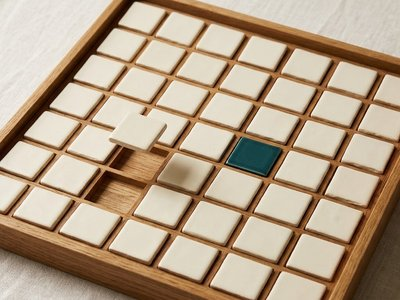
Why Real Sudoku Puzzles Have Only One Answer (and Why Guessing Fails)
A 2012 proof set the Sudoku minimum at 17 clues. See how setters guarantee one unique solution - and how to tell a hard puzzle from a broken one.

The Memory Palace Method: How Anyone Can Train a World-Class Memory
Meta-analyses show the method of loci brings large memory gains (d=0.88). Build your first memory palace in 15 minutes with this science-backed guide.

Guess Like a Mathematician: How Information Theory Wins Guessing Games
A 2026 Binghamton study solved 99% of Wordle puzzles with Shannon entropy. Learn 3 rules — split, probe, budget your bits — to win Bulls and Cows, Nerdle & more.

IQ Test Question Types: 8 Formats Explained With Practice Tips
The 8 IQ test question types, from matrix reasoning to digit span — with worked examples, a 4-step solving framework, and what research says about practice.
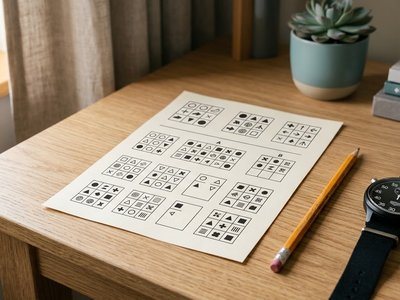
Can You Actually Raise Your IQ Score? What the Retest Research Shows
Retesting raises IQ scores by about 5 points — but the gains stop after the third attempt. What a 2018 meta-analysis of 153,185 people says about practice effects.

One-Line Puzzles: How to Solve Any Level with Euler's 1736 Rule
Count the odd dots before you draw. Euler's 1736 theorem shows in 10 seconds if a one-line puzzle is solvable — plus a 3-step method and free practice levels.

The Neuroscience of the Aha Moment: Why Solving Puzzles Feels So Good
Brain scans since 2004 traced the aha moment to a 40 Hz gamma burst in the right temporal lobe. See what insight does in your brain, plus 5 ways to get more of it.

What Is the iQiQGame Blog?
The iQiQGame blog publishes original long-form articles in four areas: step-by-step strategy guides for the site's games, cognitive science explainers on memory and attention, practical IQ and EQ insights, and news about new game releases. Every article is written for the site and cites published research where relevant.
- Learn the technique. The guides explain the solving method behind each game — corner strategy, cage combinations, the chase method — not just the rules.
- Science, not myths. The brain-training articles summarise what published research actually shows, including where the evidence is weak.
- Understand your scores. The IQ and EQ series explains what the numbers mean, their ranges and the retest research.
- Stay current. The news section covers each new game and variant as it launches.
How to Use the Blog
- Pick a topic below — Game Guides & Tips, Brain Training & Cognitive Science, IQ & EQ Insights or Game News & Trends.
- Open an article and read it alongside the game it covers; the guides reference the games they teach.
- Apply one technique per session — each guide ends with concrete, testable tactics.
- Subscribe to your interest area and return for new releases.
Blog FAQ
Is the blog free to read?
Yes. Every article on the iQiQGame blog is free to read with no account required.
Who writes the articles?
The iQiQGame team writes original articles and cites published cognitive science research where relevant.
Are the game guides suitable for beginners?
Yes. Each guide starts from the rules and builds to advanced tactics, so beginners can follow along and experienced players can skip ahead.
New articles are published across the four topics as games and research evolve.