Meta-analyses show the method of loci brings large memory gains (d=0.88). Build your first memory palace in 15 minutes with this science-backed guide.
Ask a memory champion how they memorize a shuffled deck of cards, and you will rarely hear "I was born this way." You will hear about a house. A route. A strange parade of images walking through rooms they have known since childhood. The technique behind that house is called the method of loci — or, more popularly, the memory palace — and the good news is this: it works just as well for people who regularly lose their car keys.
This article explains why your brain loves places, what the research actually says about ordinary people using this method, and how to build your first memory palace in about fifteen minutes.
The Trick That Refuses to Die: 2,500 Years of the Method of Loci
The origin story is appropriately dramatic. Ancient sources credit Simonides of Ceos, a Greek poet of the fifth century BCE, who supposedly identified the crushed victims of a collapsed banquet hall by recalling where each guest had been sitting. Places preserved the names. The insight stuck: location is a hook for memory.
Roman orators used the method to deliver hours-long speeches without notes — each argument "placed" along an imagined building. The technique was outlined in three classical texts and never really disappeared. A 2025 systematic review in the British Journal of Psychology traces its history from the Ad Herennium to modern memory sports, cataloguing decades of studies on how and why it works (Ondřej, 2025, PMC).
Not bad for a technology with no electricity and no subscription fee.
Why Your Brain Is a Spatial Machine First, a Word Machine Second
Navigation came before language
For hundreds of thousands of years, remembering where things were — the water hole, the dangerous ravine, the tree that fruits in autumn — was a survival skill. Your brain built serious hardware for it. The hippocampus, the parahippocampus, and the retrosplenial cortex form a navigation network that encodes places, routes, and landmarks with remarkable precision.
Abstract verbal information? Words, numbers, list items? Those are newcomers, and your brain handles them with a leakier system.
The hijack: putting facts into places
The memory palace works by exploiting this asymmetry. Instead of asking your verbal memory to hold a meaningless list, you convert each item into a vivid image and "place" it at a spot along a route you already know perfectly. Reviewing the list becomes a mental walk.
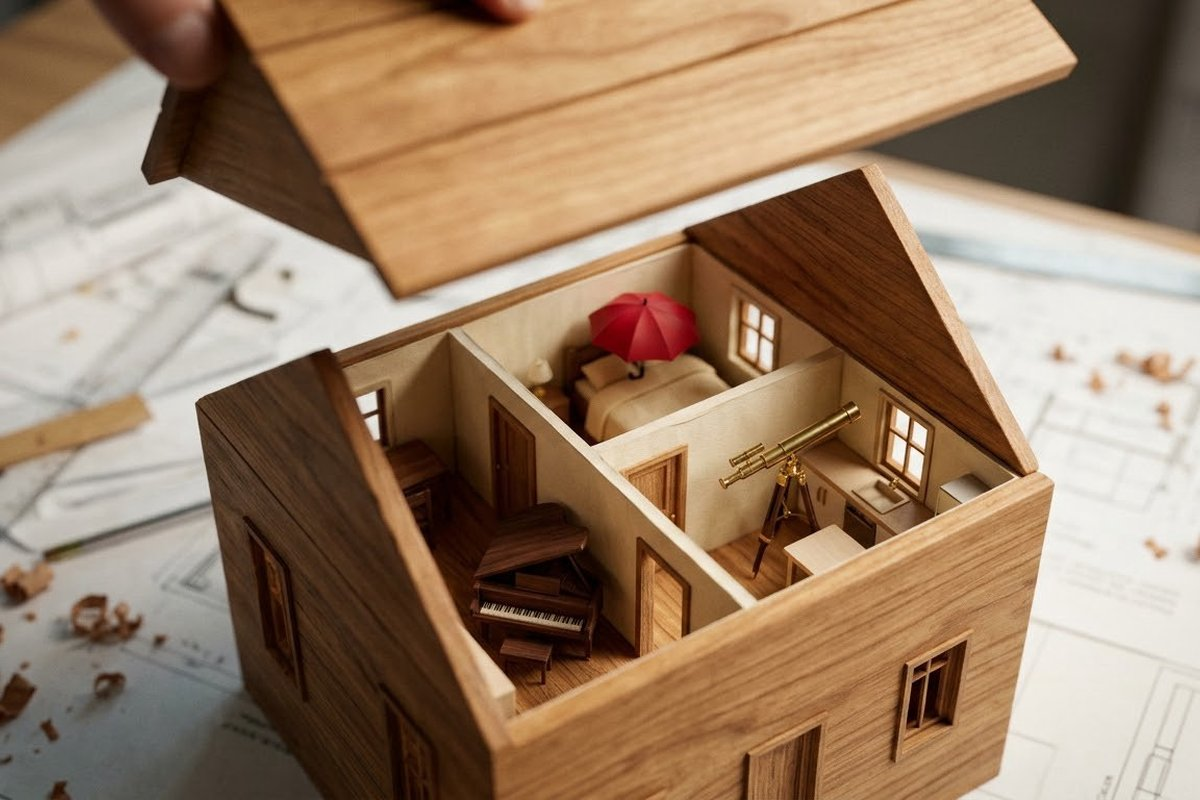
This is not just a cute metaphor — it changes how deeply the information is processed. The 2025 review found that the method of loci consistently activates exactly those spatial-memory and navigation regions (hippocampus, parahippocampus, retrosplenial cortex), and that its effectiveness aligns with the "levels of processing" framework: the spatial story forces deep, elaborate encoding rather than shallow repetition (PMC12514325). Brain-imaging studies even show structural and functional changes in these regions after training.
Think of it this way: a bare shopping list has no address. A memory palace gives every item a street, a door, and a room.
The Evidence: What Meta-Analyses Say About Ordinary Brains
Big effects, replicated twice
The effect is not a lab curiosity. A meta-analysis of 13 randomized controlled trials, published in 2021, found that the loci method improved recall with a medium effect size of g = 0.65 — stable across control conditions, settings, and sensitivity analyses (Twomey & Kroneisen, 2021, PubMed). The authors do flag one limitation: most included trials under-reported their randomization procedures, so the evidence, while consistent, has room to tighten. The newer 2025 review went further: for immediate serial recall, the method of loci beat rehearsal strategies with a large effect size (d = 0.88), backed by a Bayes factor of about 162 (PMC12514325) — though its authors likewise rate the quality of the underlying studies as mixed.
In plain terms: compared with repeating a list over and over, walking a memory palace is not a marginal improvement. It is the difference between a leaky bucket and a shelf.
Six weeks from average to athlete
The most striking evidence comes from a study by researchers at Stanford and the Donders Institute, published in Neuron. Researchers tested 23 of the world's top-50 ranked memory athletes against ordinary controls. Asked to memorize 72 words, the athletes recalled an average of nearly 71 after twenty minutes. The non-athletes managed about 40.
Then the researchers trained a group of regular people in the method of loci for six weeks. That group — and only that group — started recalling words almost at athlete level, and still did four months later. Using fMRI, the team could see that even at rest, the trainees' brain-activity patterns in memory-related regions had shifted toward those of the athletes (Stanford Medicine). As senior author Michael Greicius put it, training normal humans this way "bulks up the brain's memory networks."
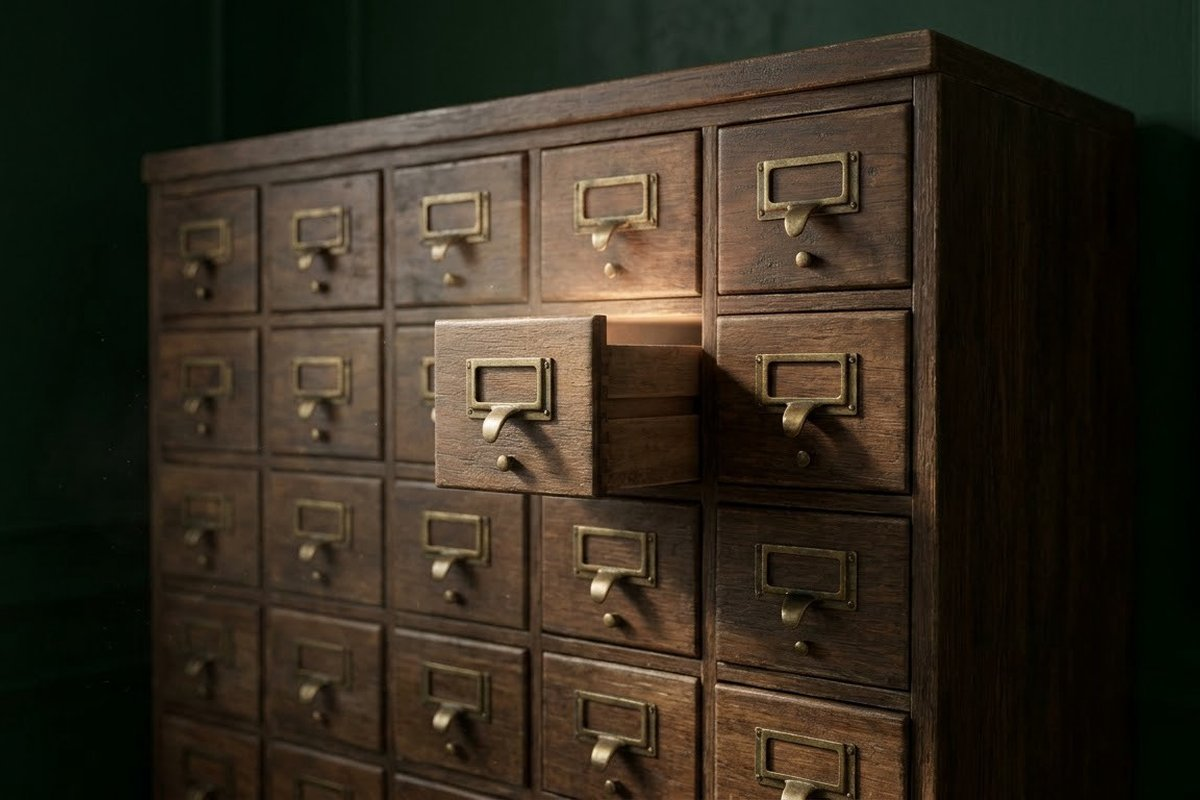
One honest caveat before the hype takes over: the study measured trained recall tasks, not general intelligence. A memory palace will not raise your IQ score — but it will make anything you deliberately store in it dramatically easier to get back out. And there is a charming detail worth keeping: the athletes in the study reported that the skill did not spill over into daily life. They lost their car keys as often as everyone else. You have to put things in the palace.
Build Your First Memory Palace in 15 Minutes
Theory done. Here is the practical version. You need one familiar route and one list to remember. Nothing else.
Step 1: Pick a route you can walk with your eyes closed
Your home is the classic choice. The path from your front door to the kitchen is ideal: it is short, and you have navigated it thousands of times. Now fix ten "stations" along it in a fixed order — the doormat, the shoe rack, the hallway mirror, the coat hook, the living-room sofa, the TV stand, the bookshelf, the dining table, the sink, the fridge. Always visit them in the same order. The order is the spine of the whole system.
Step 2: Place images, not words
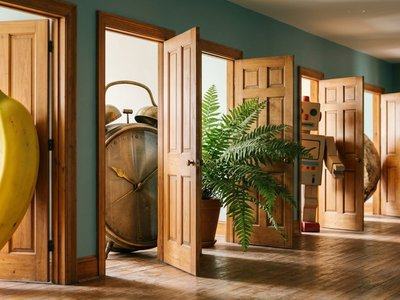
Take the first item you want to remember and turn it into an image — then make it exaggerated, absurd, and in motion. Want to remember "buy bananas"? Do not picture a banana on the doormat. Picture a giant banana wedged in the mail slot like a yellow mailbox, splitting open. "Call the dentist"? A tooth in a business suit is doing pull-ups on the shoe rack.
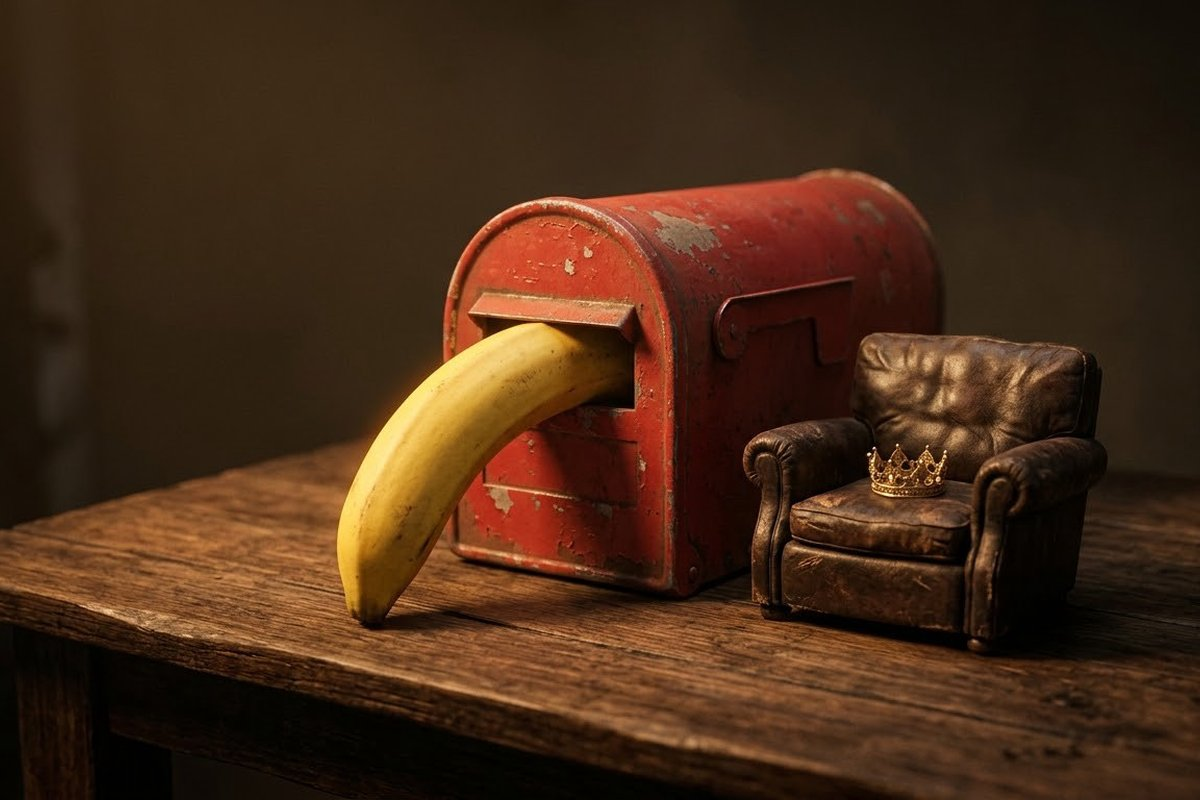
Vivid beats logical. The strangeness is not decoration; it is the encoding. Vague, overly "sensible" images are the most common beginner mistake.
Step 3: Walk it back — two or three times
Close your eyes and stroll the route. Doormat, banana. Shoe rack, tooth in a suit. Do the full walk immediately after placing, then again a few hours later, then the next day. Each walk strengthens the route-item bond, and the spatial order comes free — your palace gives you structure, not just content.
Step 4: Reuse and expand
One palace, one theme. If you use the same route for your shopping list and your work presentation, the images will collide. Build a second palace for a second topic — your commute, a friend's apartment, a favorite park. Serious users maintain dozens. (Competitors go further, assigning fixed images to numbers and cards so that whole decks become single, absurd scenes — worth exploring later, not on day one.)
Three beginner mistakes to avoid
- Images that are too reasonable. A photo-realistic milk carton on a table is forgettable. A milk carton wearing sunglasses, tap-dancing on the table, is not.
- Stations that are too vague. "Somewhere in the living room" is not a station. The left armrest of the sofa is.
- Overloading one palace. Ten stations, ten items. Fill one palace cleanly before cramming another.
Make It a Daily Habit: Pairing Loci With Short Training Games
A memory palace is an encoding technique — it helps you store things deliberately. Keeping the underlying system sharp is a different job, and short daily training sessions do it well. Ten minutes is enough: use the palace during the day for something real (a list, a schedule, a set of names), then warm down with a quick memory game.

The U.S. National Institute on Aging is refreshingly practical about memory as we get older: mild forgetfulness is a normal part of aging, not automatically a red flag — and its official tips include learning a new skill and staying mentally active (NIA). Building memory palaces is learning a new skill — one with immediate, measurable payoff.
Good pairings from our own library:
- memory match game — flip cards and find pairs; trains visual location memory, the same network your palace uses.
- N-Back — the classic working-memory workout; if you want the science behind it, see our guide on how to improve working memory.
- Or browse the full set of free memory and brain training games and build your own ten-minute routine.
Conclusion: Your Memory Isn't Broken, It's Under-Coded
Three takeaways. The mechanism: your brain stores places superbly, so park facts in places. The evidence: two meta-analyses and a Stanford Neuron study agree the method of loci produces large recall gains for ordinary adults — even turning six weeks of practice into near-athlete performance. The method: one familiar route, ten stations, absurd images, three walks.
Your memory was never the problem. It has been waiting for an address system. Pick a route in your home tonight, place tomorrow's to-do list along it, and take a walk in your head. Then come play a round of memory match — consider it a victory lap.
References
- Ondřej, J. (2025). The method of loci in the context of psychological research: A systematic review and meta-analysis. British Journal of Psychology.
- Twomey, C., & Kroneisen, M. (2021). The effectiveness of the loci method as a mnemonic device: Meta-analysis. Quarterly Journal of Experimental Psychology.
- Stanford Medicine — Mnemonic system called method of loci enables anyone to be a memory athlete
- National Institute on Aging — Memory Problems, Forgetfulness, and Aging: What's Normal and What's Not?