
Play Kropki Sudoku Online Free - Daily Dots Puzzle
More Sudoku Puzzles
What Is Kropki Sudoku?
Kropki Sudoku (also called Dots Sudoku) is a Sudoku variant that adds dot-based relationships between adjacent cells.
In addition to standard Sudoku rules:
Each row contains every digit exactly once
Each column contains every digit exactly once
Each box contains every digit exactly once
Kropki Sudoku introduces two types of dots between orthogonally adjacent cells:
White dot (○): the two digits differ by exactly 1 (they are consecutive)
Black dot (●): one digit is exactly double the other (ratio 1:2)
If no dot appears between two adjacent cells, neither relationship is allowed. This absence of dots rule is just as important as the dots themselves.
Kropki Sudoku is available in 4×4, 6×6, and 9×9 grid sizes on our platform, each offering a different balance between arithmetic logic and spatial reasoning.
Understanding the Dots
Black Dots: The 2× Relationship
A black dot means one number is exactly twice the other. The valid pairs are:
(1,2)
(2,4)
(3,6)
(4,8)
When 1 and 2 are adjacent, both the white dot condition (consecutive) and the black dot condition (double) are satisfied. In this case, a black dot takes precedence.
White Dots: The ±1 Relationship
A white dot means the two numbers differ by exactly 1:
(1,2), (2,3), (3,4), (4,5), (5,6), (6,7), (7,8), (8,9)
This is a looser constraint than a black dot — but becomes powerful when combined with Sudoku restrictions.
No Dot Means None of the Above
If two adjacent cells do not have a dot, they are NOT consecutive and NOT in a 1:2 ratio. Many beginners miss this rule. Experienced solvers rely on it constantly.
Kropki Sudoku Solving Tips and Strategies
1. Black Dot Exclusion Rule
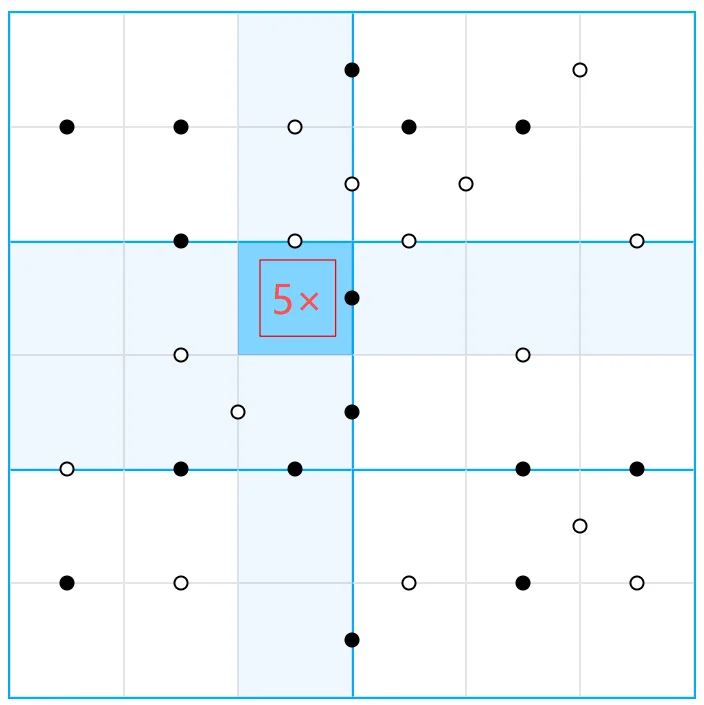
This does not place a number — but it removes high-impact candidates globally. Experienced solvers apply this rule to every black dot before thinking about rows or boxes.
2. Multi-Dot Not Equal 1 Rule
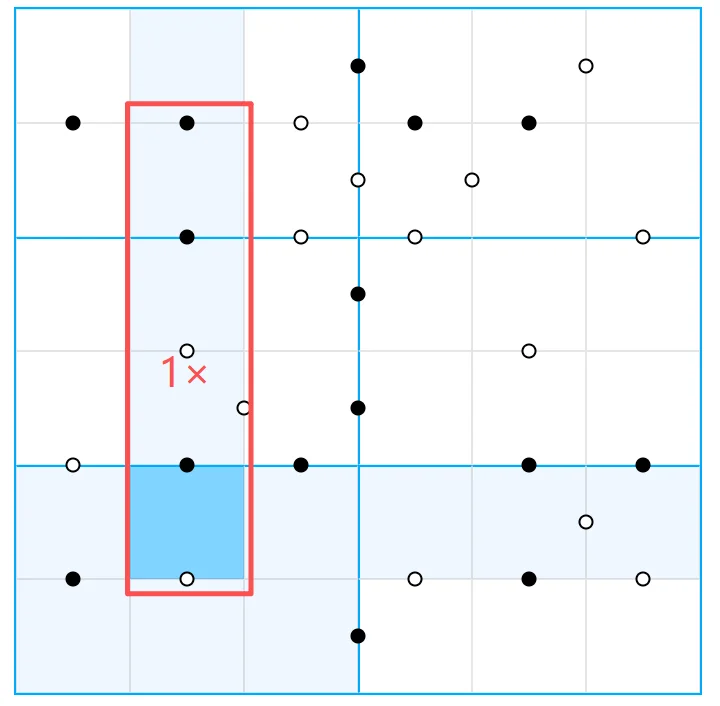
This rule is extremely useful in dense dot areas and often removes 1 from multiple cells at once.
3. Double Black Chain
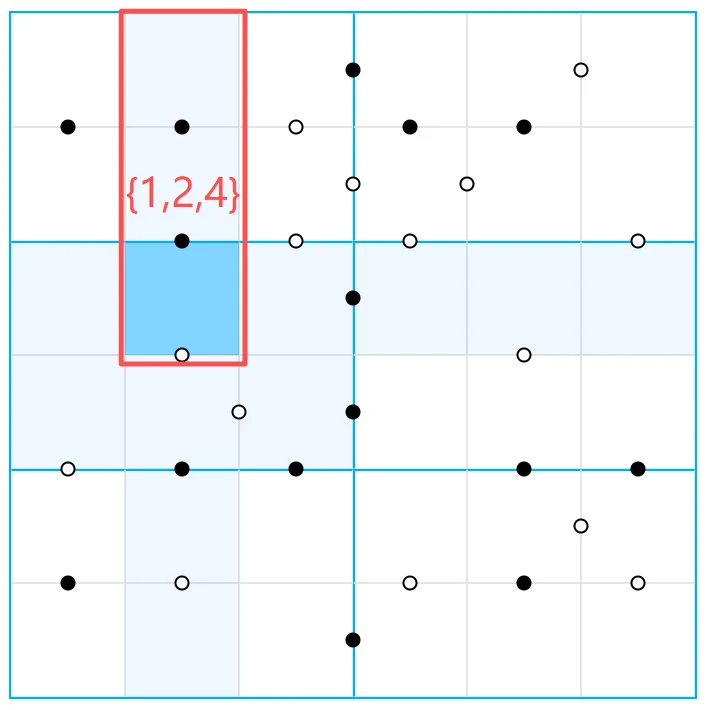
This pattern rarely gives a fixed digit immediately, but it locks the structure so tightly that other placements soon follow.
4. Black-White-Black Sandwich

This is not a guess — it is forced by arithmetic.
5. Closed Dot Loop (Ring Pressure)
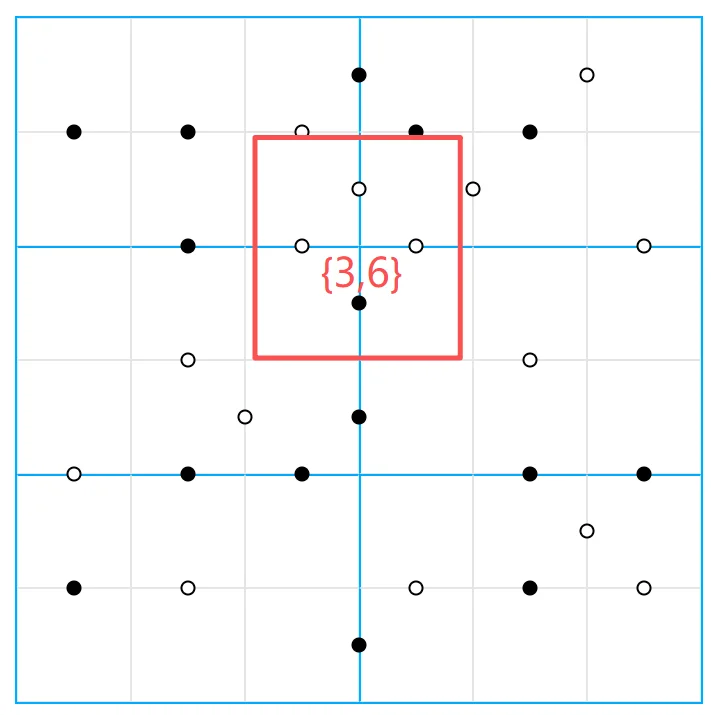
This is a powerful mid-game technique and often gives direct placements, not just eliminations.
6. White Chain Pressure
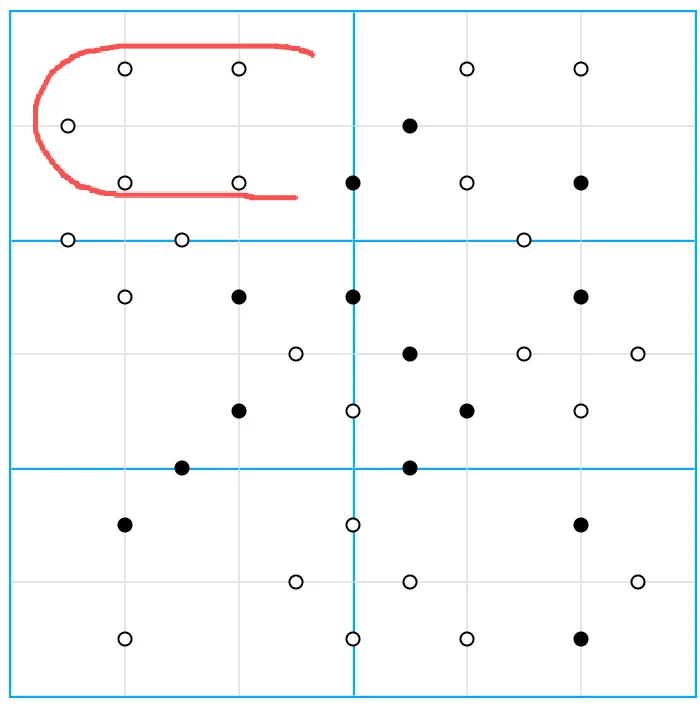
White-dot chains rarely give immediate placements, but they sharply narrow the search space.
7. No-Dot Rule — The Most Overlooked Constraint
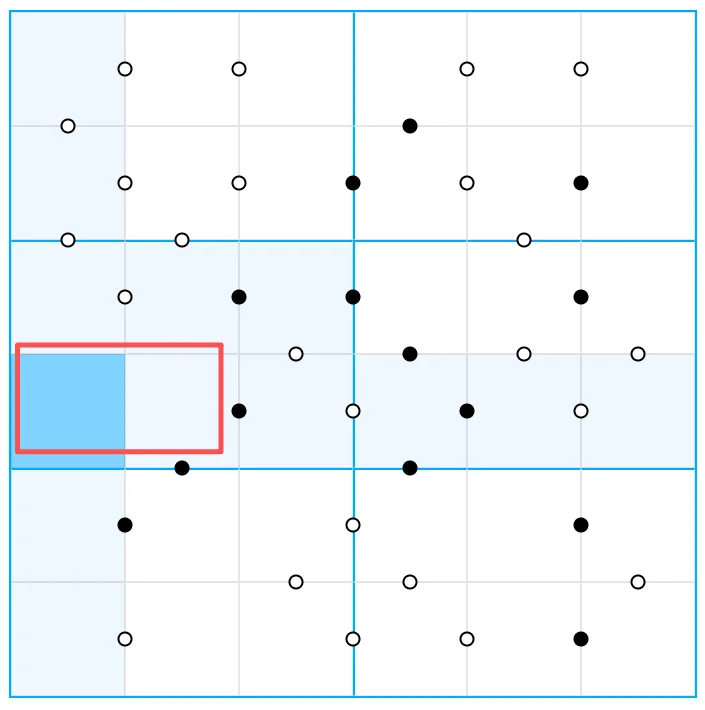
In many puzzles, the no-dot constraint removes more candidates than all the visible dots combined. Experienced solvers know that absence of dots is itself the strongest clue.
Kropki Sudoku FAQs
Why does Kropki Sudoku often start with very few given numbers?
This is intentional. Many Kropki Sudoku puzzles have far fewer givens than standard Sudoku because the dots themselves are the information. A good Kropki puzzle forces you to extract meaning from where dots exist and where dots are missing.
What does "no dot" between two cells really mean?
No dot is not neutral — it is a strong restriction. If two adjacent cells have no dot between them, they cannot be consecutive and cannot be in a 1:2 ratio. In 6×6 and 9×9 grids, this often removes more candidates than a dot would.
Can I use standard Sudoku techniques in Kropki Sudoku?
Absolutely. All standard techniques (naked singles, hidden singles, pointing pairs) still apply. However, most progress in Kropki Sudoku comes from dot logic first, and standard techniques finish the puzzle.
Why do black dots feel stronger than white dots?
Because doubling is rarer than being consecutive. White dots allow many pairs: (1,2) through (8,9). Black dots allow very few: (1,2), (2,4), (3,6), (4,8). When black dots cluster, they create fixed digit sets and often determine the scale of numbers in that area.
Is Kropki Sudoku closer to math or pure logic?
Pure logic. No arithmetic is required beyond recognizing doubles and differences of one. The challenge is not calculation — it is pattern pressure: how restrictions accumulate until only one outcome remains.
Which grid size should I start with?
4×4: Only digits 1-4. Black dots are just (1,2) and (2,4). A quick way to learn dot logic.
6×6: Digits 1-6. Black dots are (1,2), (2,4), (3,6). Best balance for learning.
9×9: Full range 1-9 with all four black dot pairs. The complete Kropki experience.