
9*9 SudokuOnline Free - Daily Logic Number Puzzle Game
More Sudoku Puzzles
What Is 9x9 Sudoku?
9x9 Sudoku is the standard and most widely played form of Sudoku, featured in newspapers, mobile apps, competitions, and puzzle books around the world. Using the numbers 1-9 and 3x3 boxes, 9x9 Sudoku offers the perfect balance between logic, challenge, and satisfaction. While beginner techniques are still useful, solving harder puzzles requires learning standard sudoku strategies used by experienced players.
9x9 Sudoku Rules
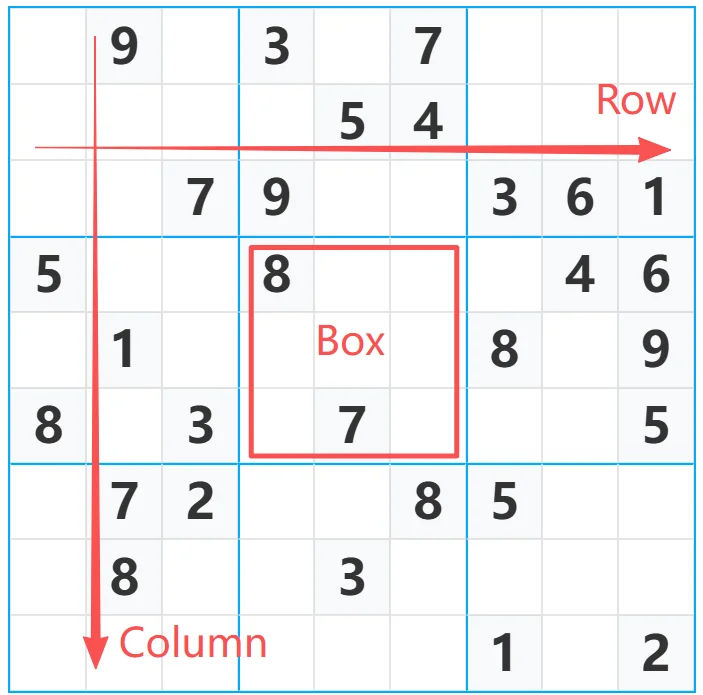
The rules of 9x9 Sudoku define the classic puzzle structure:
Each row must contain numbers 1-9 exactly once
Each column must contain numbers 1-9 exactly once
Each 3x3 box must contain numbers 1-9 exactly once
All valid Sudoku puzzles are designed to be solved using logic alone, without guessing.
Who Is 9x9 Sudoku For?
9x9 Sudoku is ideal for:
Regular Sudoku players
Puzzle enthusiasts looking for logical challenges
Players who enjoy improving technique and speed
Anyone seeking the traditional Sudoku experience
If you are new to Sudoku, starting with 4x4 or 6x6 may help build confidence before tackling 9x9 grids.
Techniques for Solving 9x9 Sudoku
Solving 9x9 Sudoku efficiently requires more than spotting obvious moves. The techniques below are standard logical strategies used by experienced Sudoku players and puzzle designers. You do not need to use all of them in every puzzle, but understanding when and why they work will greatly improve your solving ability.
1. Last Digit
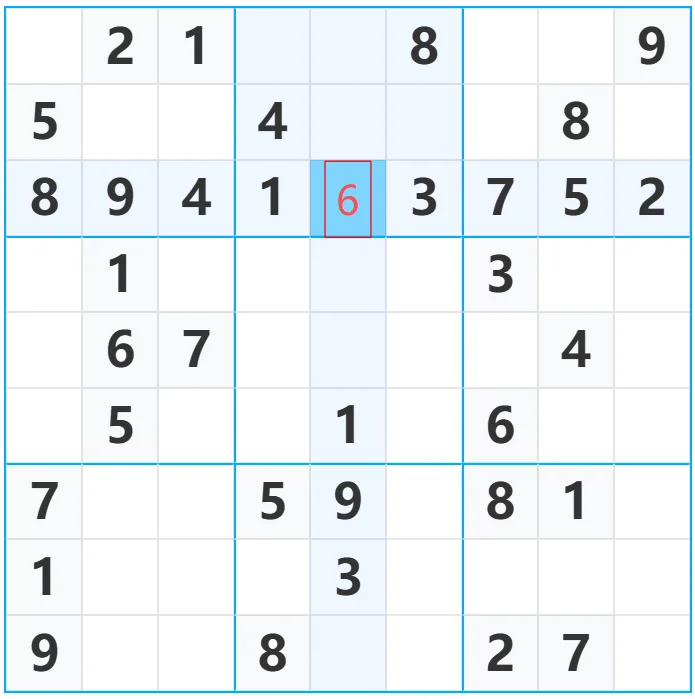
When a row, column, or 3x3 box has only one empty cell, the missing number is immediately determined. This is the simplest logical move and often appears at the end of chains created by more advanced techniques.
2. Naked Single
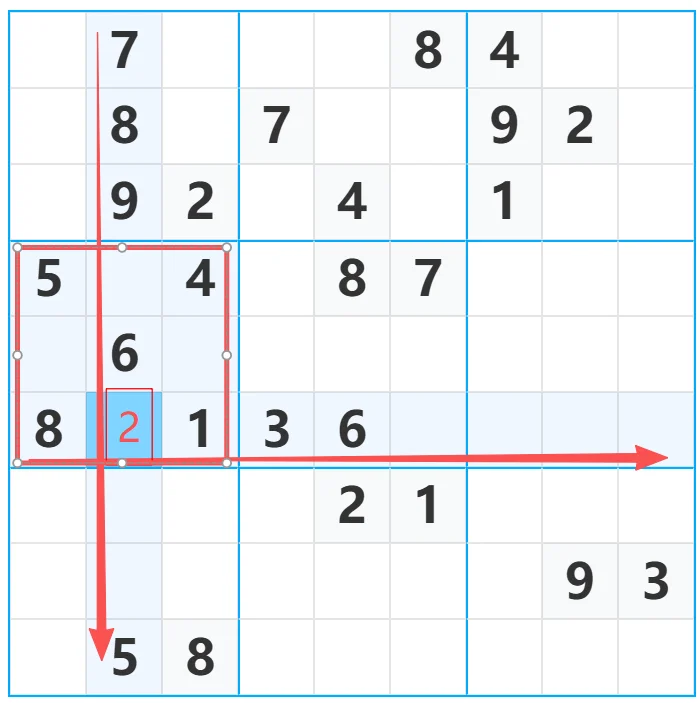
A cell has only one possible candidate after eliminating numbers already present in its row, column, and box. Naked Singles are the backbone of all Sudoku solving and appear at every difficulty level.
3. Hidden Single
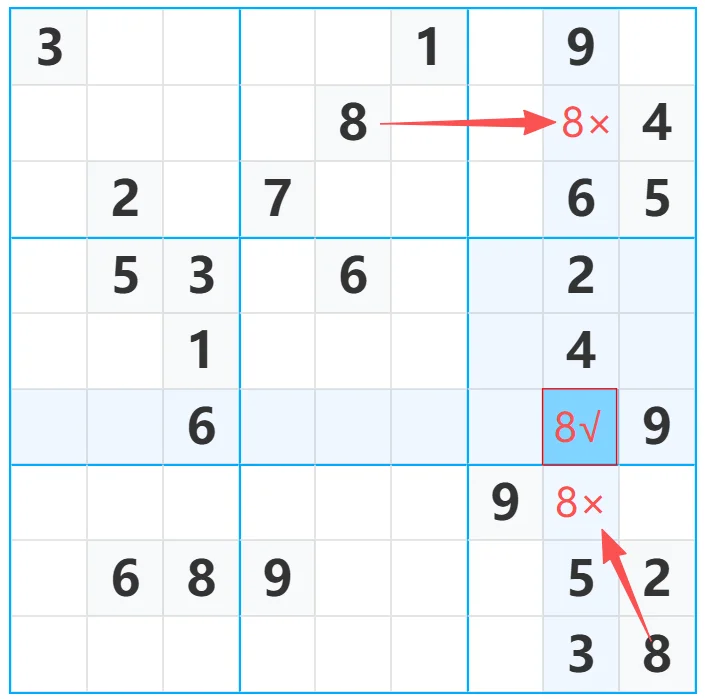
A number appears only once as a candidate within a row, column, or box - even if that cell has multiple candidates. Hidden Singles are easy to miss but unlock many puzzles that appear stuck.
4. Naked Pair
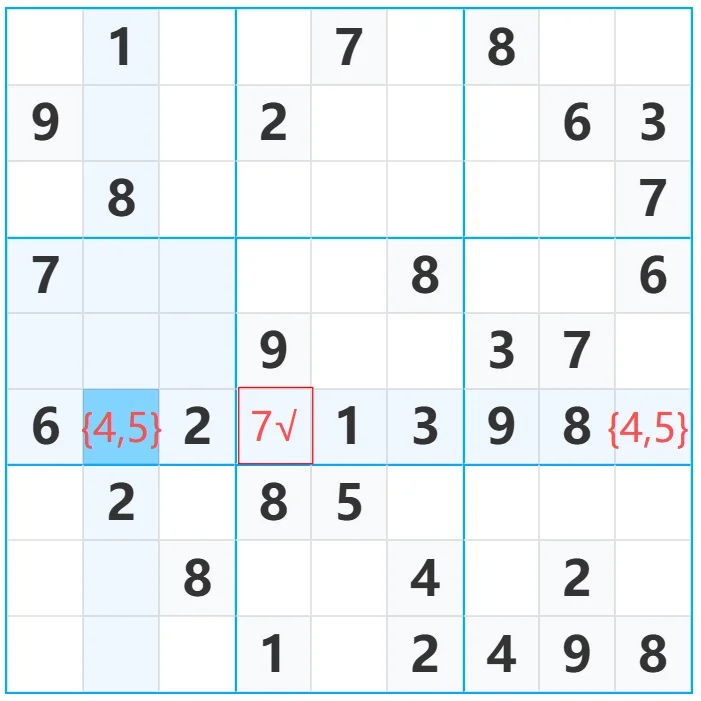
Two cells in the same unit (row, column, or box) contain exactly the same two candidates. No other cell in that unit can contain those numbers. Naked Pairs reduce large candidate sets and prepare the grid for singles.
5. Hidden Pair
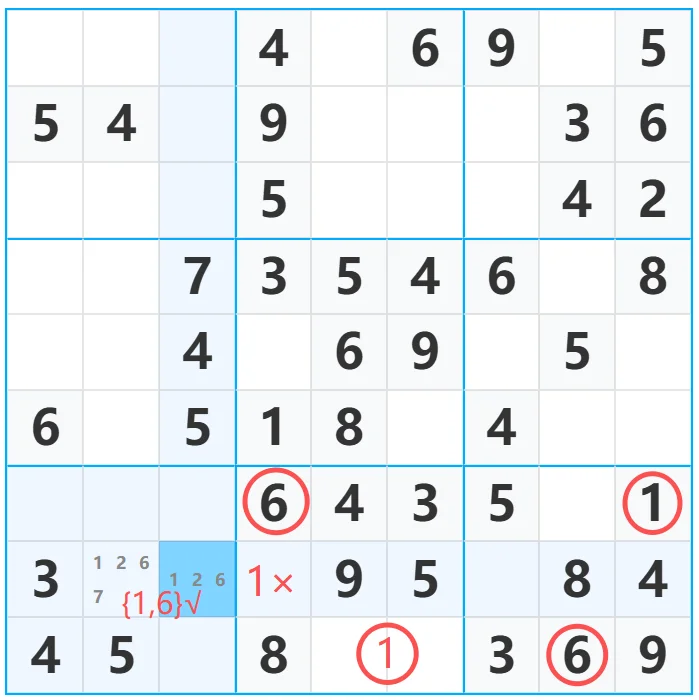
Two numbers appear only in the same two cells within a unit, even if those cells contain extra candidates. Those two cells must be those two numbers, and all other candidates can be removed from them. Hidden Pairs are more subtle than Naked Pairs and often missed by beginners.
6. Locked Candidate (Box-Line Interaction)
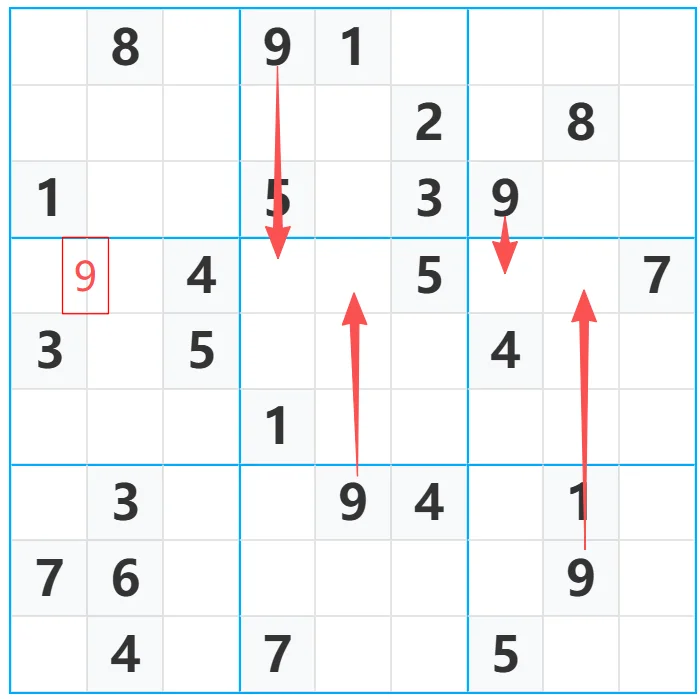
A candidate number in a box is restricted to a single row or column. If all possible positions for a number in a box are in the same row, then that number cannot appear elsewhere in that row outside the box. This technique creates eliminations across different units and is essential for medium puzzles.
7. Hidden Groups (Pairs / Triples)
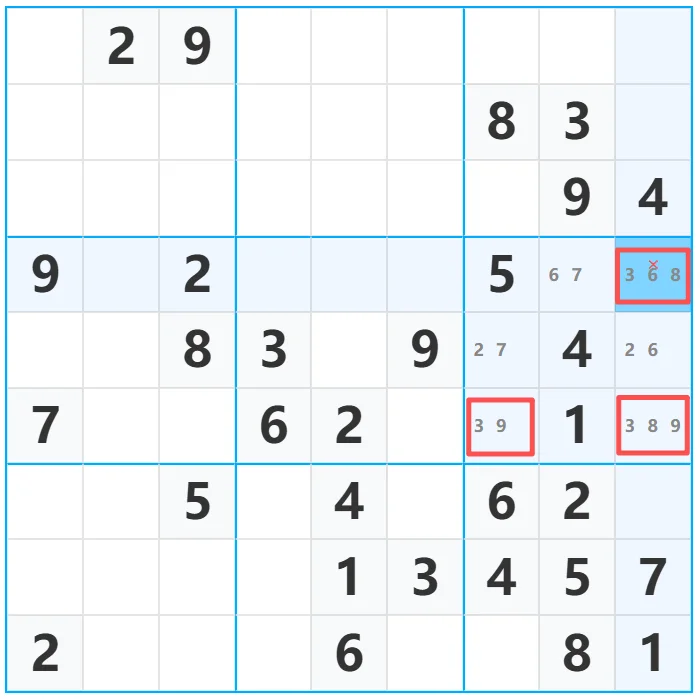
A small group of numbers is confined to the same small set of cells within a unit. Those cells can be restricted to those numbers only. Hidden Groups reduce ambiguity and often trigger chains of progress.
What These Techniques Cover - And What Comes Next
The techniques listed above form the core logical foundation of standard 9x9 Sudoku solving. They are sufficient to solve all easy and most medium puzzles, many well-designed logic-only Sudoku grids, and puzzles intended for casual and intermediate players. Most importantly, these techniques teach you how Sudoku logic works, not just how to fill numbers.
However, as puzzle difficulty increases, you may encounter situations where no singles are available, candidate eliminations become less obvious, and progress requires recognizing larger patterns across the grid. At that point, advanced techniques come into play: X-Wing, Y-Wing, W-Wing, swordfish, and chain-based logic. These advanced methods are not about guessing - they are extensions of the same logical principles, applied at a wider scale.
A good rule of thumb: Master the basics first, then add advanced techniques only when puzzles truly require them.
Try Other Sudoku Sizes
4x4 Sudoku - learn the basics
6x6 Sudoku - intermediate challenge
Frequently Asked Questions
What is 9x9 Sudoku?
9x9 Sudoku is the standard and most widely played form of Sudoku. It is played on a 9-by-9 grid using the numbers 1 through 9. Each number must appear exactly once in every row, column, and 3x3 box. This classic structure is the foundation for nearly all Sudoku variants and solving techniques.
Does 9x9 Sudoku require guessing?
No. A properly constructed 9x9 Sudoku puzzle is fully solvable using logic alone. Even the hardest puzzles rely on advanced techniques rather than guessing. If guessing seems necessary, it usually means a hidden single was missed, a pair or group was overlooked, or a pattern like X-Wing or Y-Wing hasn't been recognized yet.
What techniques are commonly needed for 9x9 Sudoku?
9x9 Sudoku uses a wide range of logical techniques. Basic: Naked Single, Hidden Single, Candidate Elimination. Intermediate: Naked Pair/Triple, Hidden Pair/Triple, Locked Candidates. Advanced: X-Wing, Y-Wing, W-Wing, Swordfish (in harder puzzles). Not every puzzle requires all of these, but experienced solvers learn to recognize them gradually.
What is the difference between Naked Singles and Hidden Singles?
A Naked Single occurs when a cell has only one possible candidate left. A Hidden Single occurs when a number can only appear in one cell within a row, column, or box, even if that cell still has multiple candidates. Hidden Singles are one of the most important transitions from beginner to intermediate Sudoku solving.
Why do I get stuck even when the puzzle looks almost finished?
This usually happens because the remaining cells require pattern-based logic, simple elimination no longer creates progress, or a technique like Locked Candidates or a Pair is needed. Near the end of a puzzle, the grid often becomes more constrained but less obvious. Slowing down and checking each unit carefully is more effective than rushing.
What is the most important technique to learn after basics?
For most players, the single most important step forward is learning Locked Candidates. This technique explains how a candidate confined to one row or column inside a box can be eliminated from other cells in that row or column. It appears frequently and unlocks many puzzles without requiring complex patterns.
Are advanced techniques like X-Wing required for all puzzles?
No. Most easy and medium 9x9 Sudoku puzzles can be solved without X-Wing or similar techniques. Advanced techniques are mainly needed for hard and expert-level puzzles, or puzzles designed specifically to avoid simpler logic. Learning them improves efficiency and confidence, but they are not mandatory for casual play.
How long does a 9x9 Sudoku puzzle take to solve?
Solving time varies widely: Easy puzzles take 5-10 minutes, Medium puzzles 10-25 minutes, and Hard puzzles 30 minutes or more. Experienced solvers may be faster, but careful logical solving is more important than speed.
Should I use pencil marks in 9x9 Sudoku?
Yes - pencil marks are strongly recommended. In 9x9 Sudoku, most cells start with multiple candidates, and advanced techniques depend on candidate visibility. Using pencil marks helps prevent mistakes and makes patterns easier to spot.
Can 9x9 Sudoku be solved by beginners?
Absolutely. Beginners should start with easy or medium puzzles, focus on singles and elimination, and avoid worrying about advanced techniques too early. With practice, skills naturally build toward more complex logic.
Why are 9x9 Sudoku puzzles so popular?
9x9 Sudoku strikes a balance between simplicity of rules, depth of logic, and nearly infinite puzzle variety. It offers endless challenge without requiring mathematics, language, or guesswork - making it accessible worldwide.