Count the odd dots before you draw. Euler's 1736 theorem shows in 10 seconds if a one-line puzzle is solvable — plus a 3-step method and free practice levels.
Every player of a one-line puzzle knows the moment. One connection left. The screen shows a tangle of dots and lines that you have redrawn a dozen times, and there is simply no way to finish without lifting your finger. It feels like the game is mocking you.
It isn't. In most of those cases, the level was mathematically unwinnable from the start — and you could have known that in about ten seconds, using a rule a mathematician worked out in 1736. This article explains that rule, shows you a three-step method built on it, and explains why the "impossible" levels in your favorite game are teaching you one of the most useful ideas in all of mathematics.
The 300-Year-Old Puzzle That Started It All
The story begins in Königsberg, a Prussian city split by a river and its two islands, joined to the banks by seven bridges. A local pastime was to invent a walk that crossed every bridge exactly once. Nobody could do it — not the strollers, not the clever ones, not the ones who tried for years.
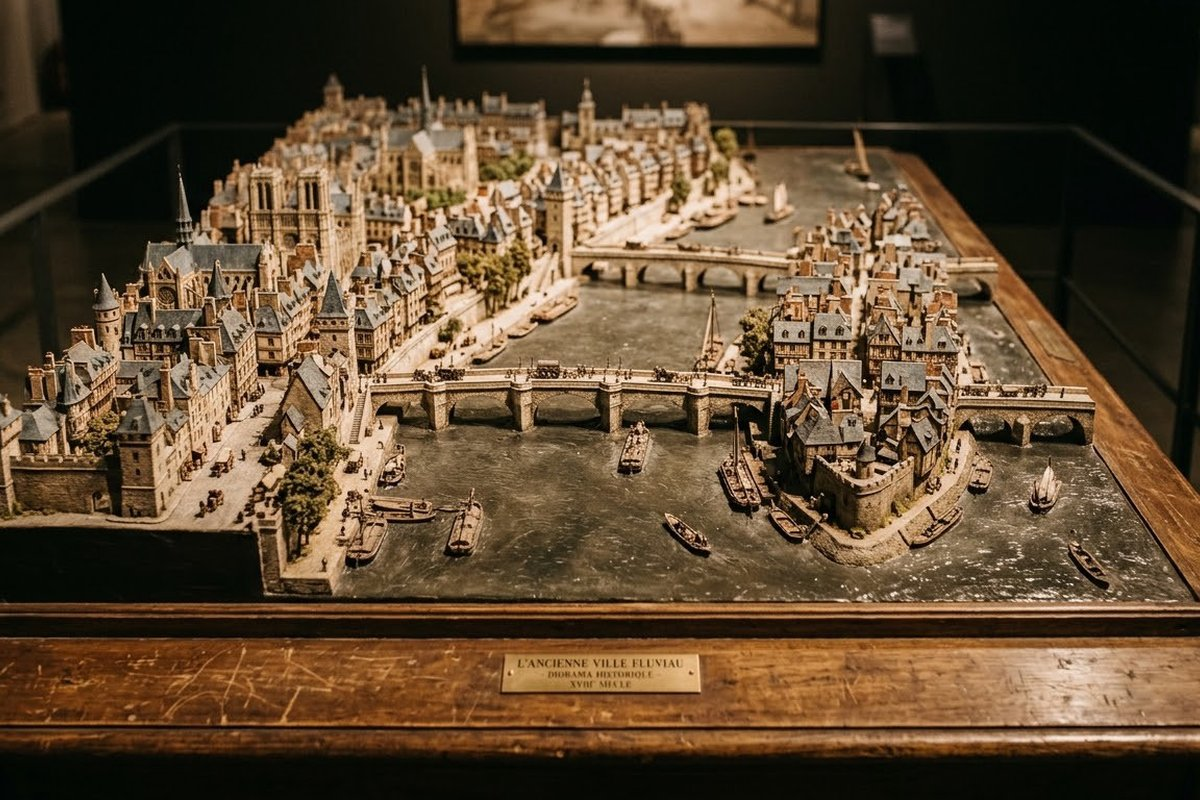
As Plus Magazine tells the story, the puzzle landed on the desk of Leonhard Euler, who noticed something the strollers had missed: the shapes of the islands, the widths of the river, the lengths of the bridges — none of it mattered. The only thing that mattered was what connected to what. Strip everything else away and the city becomes four dots joined by seven lines.
That act of ruthless simplification did more than answer a stroll question. As the Mathematical Association of America notes in its history of Euler's proof, treating the problem with dots and letters was a completely new kind of thinking in 1736, and it accidentally founded an entire branch of mathematics: graph theory. Every one-stroke level you play on your phone is a direct descendant of those seven bridges.
Why "just try every route" fails
Could you brute-force the Königsberg walk? With seven bridges there are 7! = 5,040 orderings to check — tedious but possible. Real one-stroke puzzles go far beyond that. A grid with 30 lines has astronomically more orderings, and no human (and no casual algorithm) enumerates them. You need a rule that decides solvability without trying routes. Euler found one.
The One Rule: Count the Odd Dots
Here is the whole machinery, and it fits in one paragraph.

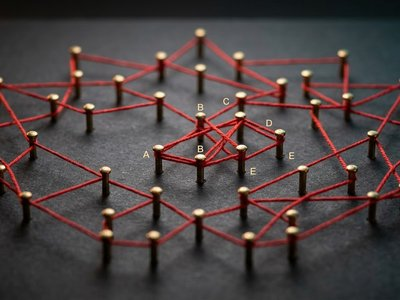
Look at any dot in the puzzle and count how many line segments touch it. Call that number the dot's degree. If the degree is odd, it's an odd dot; if even, an even dot. Now the key fact: every time your path passes through a dot, it uses two lines — one to arrive, one to leave. So every dot in the middle of your journey must have an even degree. Only the very start and the very end of your path can be odd.
Flip that around and you get Euler's theorem. As Fan Chung Graham's lecture notes at UC San Diego state it: a connected graph can be traced in one stroke if and only if it has either zero or two odd-degree vertices. In game terms:
- 0 odd dots — you can draw the whole thing and finish where you started (an Euler circuit). Start anywhere.
- 2 odd dots — you must start at one of them and you will end at the other. If you start anywhere else, you will strand a line.
- 3, 4, 5 or more odd dots — mathematically impossible. No route exists, no matter how clever you are.
One caveat: the graph must be connected. If some lines form an island that doesn't touch the rest, no rule can save you — you can't teleport between components.
The hidden symmetry you can exploit
Here's a small gift: the number of odd dots in any figure is always even. Every line contributes to the degree of exactly two dots, so all degrees together add up to an even number. A puzzle can therefore have 0, 2, 4, 6... odd dots — never exactly 1 or exactly 3. When a level looks like it has "three awkward corners," recount, because you've miscounted one of them.
A 3-Step Method to Beat Any Level
The rule tells you whether a level is winnable. Winning it still takes a plan. Use this:
Step 1 — Count the odd dots (10 seconds). Sweep your eyes over the figure and tag every dot with an odd number of lines. This does two jobs at once: it tells you if the level is possible, and it hands you your starting point. Two odd dots? Start at one of them. All even? Start anywhere, but remember you must return to where you began.

Step 2 — Commit to the start, plan the finish. If you start on an odd dot, the other odd dot is where your finger will land last — keep it in mind as "reserved." Don't pass through it casually in the middle of your route; arriving there with lines still untraveled is the most common self-inflicted defeat.
Step 3 — Don't burn a bridge too early. As you draw, before you travel a line, ask one question: after taking it, can I still reach everything that's left? Avoid crossing the single line that connects two chunks of the remaining figure while other exits are available — take it last, not first. This is the intuition behind what mathematicians call Fleury's algorithm. If you notice you've trapped yourself, don't improvise forward; back up a few strokes and reorder.
Common failures, all avoidable with the same three habits:
- Finishing on an even dot while lines remain (you started in the wrong place).
- Splitting one loop into two disconnected halves mid-draw.
- Forgetting that the "one line connecting two halves" must be the final stroke, not the middle one.
"Impossible" Levels Aren't Broken — They're Teaching You Parity
Sooner or later you'll meet a level with four or more odd dots. You can start at any corner you like — it will never finish. This isn't a bug or bad design; it's the puzzle designer teaching you Euler's theorem the hard way. Many one-stroke games then offer exactly one rescue: add a new line between two dots.
That rescue is the theorem in action. Adding one line between two odd dots flips both of them to even, dropping the odd count by two — from 4 to 2, from 2 to 0. Suddenly the figure is drawable. Once you see that, the game's "extra line" power-up stops being a mercy token and becomes a parity calculator.
And the math doesn't stay inside the game. In a Feature Column for the American Mathematical Society, the author shows how the same Euler-circuit question — can a route traverse every edge exactly once? — became a practical tool for urban services: a snowplow or garbage truck that must cover every street without repeating passes is solving the Königsberg problem with a plow attached. The dots are intersections, the lines are streets, and the odd dots mark exactly where the truck will need to double back.

If you enjoy this brand of deduction, two other games on our site scratch the same itch from different angles: Crack the Code trains systematic constraint reasoning, and Number Sequence Puzzle trains pattern extraction — the same "find the hidden rule" muscle in a numerical wrapper.
Practice: From Seven Bridges to Your Browser
Treat the original Königsberg map as your first practice level. Four dots, each odd (degrees 3, 3, 3, 5). Verdict: impossible. Now play the two classic follow-up questions:
- Remove one bridge — which one? Any bridge works: removing it lowers the degree of its two endpoints by one, flipping both odd dots to even. All four dots become even, so a full circuit — start and finish at the same dot — suddenly exists.
- Add one bridge — where? Again, any placement that joins two of the odd dots creates a figure with exactly two odd dots, drawable in one open-ended journey.
That is the entire skill of one-stroke puzzles, compressed: look at the dots before you touch the lines. Ready to drill it? Play One Line Puzzle free on iQiQGame and run the three-step method on every level — including the ones the game insists are solvable.
And when you do crack a level that stumped you for ten minutes, that little jolt of triumph has a name and a mechanism of its own — we covered the science of it in The Neuroscience of the Aha Moment.
FAQ
Is a one-stroke puzzle the same thing as a maze? No. A maze asks which route reaches the goal; a one-stroke puzzle asks whether a route exists that uses every line once. Mazes reward search; one-stroke puzzles reward counting before searching.
Why can't a figure have exactly one (or three) odd dots? Because each line touches two dots, all degrees sum to an even number — so odd dots always come in pairs: 0, 2, 4, 6... Never an odd count of odd dots.
What if a level has four odd dots — is there really no way? Not without changing the figure. Starting point, speed, cleverness — none of it matters. The only fixes are structural: add a line between two odd dots, or (in the original bridge story) demolish a bridge.
Conclusion
Euler solved the Königsberg bridges by throwing away the map and keeping only connections. Your version of that insight: count the odd dots. Zero or two means playable; four or more means the level is lying to you. Then start at an odd dot, save the other odd dot for last, and never burn a bridge early. Three hundred years later, that's still the fastest way to win.
References
- Fan Chung Graham, UC San Diego — Königsburg Bridges (Euler's theorem and the odd-degree criterion)
- Mathematical Association of America — Leonard Euler's Solution to the Königsberg Bridge Problem
- American Mathematical Society Feature Column — Urban Geometry (Eulerian circuits in city services)
- Plus Magazine, Cambridge — The Bridges of Königsberg