

Which brain games actually help seniors? What the ACTIVE trial and crossword studies show, 7 games worth playing free, and a realistic daily routine.
Search for brain games for seniors and you will find hundreds of listicles promising to "keep your mind sharp." Most of them skip the interesting question: which of these games does research actually support, and which claims are just marketing?
This guide takes the honest route. First, a plain-language summary of what aging research really shows — including one large trial with genuinely striking results and one awkward finding that surprised the scientists. Then, seven game types worth your time, each mapped to the cognitive skill it trains, each playable free online. No miracle promises. Just games, evidence, and a realistic daily routine.
What Happens to the Aging Brain
Certain mental abilities change with age. Processing speed — how quickly you take in and respond to new information — is usually the first to slow. So is the ability to juggle several new pieces of information at once, and to recall things you learned recently.
Other abilities barely budge. Vocabulary, general knowledge, and judgment accumulated over decades stay strong well into the 80s and beyond. And the brain keeps its ability to adapt: neurons form new connections in response to challenge at any age, a property called neuroplasticity. That is the entire premise of brain training — and the reason the research below matters.
Researchers also talk about cognitive reserve: the idea that a lifetime of mental activity builds up a buffer, so the brain can cope with more age-related change before it shows. You cannot bank reserve in a single afternoon, but the evidence suggests the deposit window never closes.
What the Research Actually Shows
The strongest single result comes from the ACTIVE trial. Funded by the NIH, it followed roughly 2,800 healthy older adults assigned to training in memory, reasoning, or processing speed. Ten years later, only one group showed a lower rate of dementia: the processing-speed group, who practiced rapidly identifying visual information under time pressure. Their dementia rate was about 29% lower than controls, and a 20-year follow-up published in 2026 found roughly a 25% lower hazard of a recorded dementia diagnosis among participants who completed the booster sessions. Notably, the memory and reasoning training groups did not show this reduction. Speed, of all things, turned out to be the star.
A surprising result for pen-and-paper fans. In 2022, researchers at Columbia and Duke University published a head-to-head trial in NEJM Evidence: 107 adults with mild cognitive impairment did either web-based crossword puzzles or computerized brain games for up to 78 weeks. The crossword group scored better on standard memory tests at both checkpoints, reported better daily functioning, and — remarkably — showed less brain shrinkage on MRI scans. The researchers suspected familiarity helped: most participants had done crosswords for decades, so they could train at the right intensity from day one instead of fumbling with unfamiliar software.
The broader picture is encouraging but honest. A 2022 systematic review combining 38 longitudinal studies found that people who regularly engaged in cognitively stimulating leisure — puzzles, reading, games, music — had roughly a 23% lower incidence of dementia. That is an association, not proof of cause and effect; people who puzzle more may differ in other ways too.
And the caveats are real. The National Institute on Aging notes there is not enough evidence that commercial brain-training apps deliver the benefits seen in clinical trials — the carefully structured protocols in studies are not the same as tapping a puzzle app now and then. The FTC fined Lumosity $2 million back in 2016 for unsubstantiated claims. The reasonable takeaway: games are a useful part of brain health, not a shield you can buy.
7 Brain Games Worth Playing
Here are seven game types, ordered roughly by the strength of their supporting evidence, each with the cognitive skill it targets. All are playable free online, with no downloads and no subscriptions.
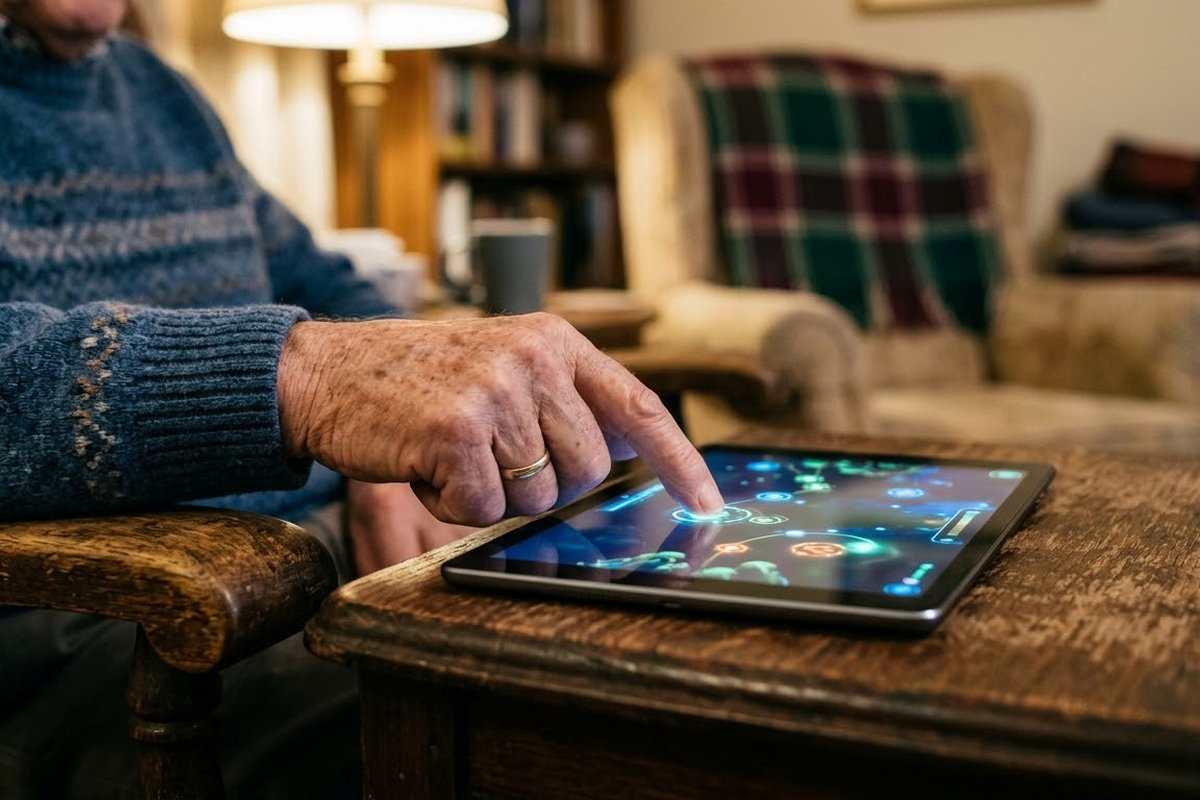
1. Speed and reaction games. Given the ACTIVE results, this category deserves the top spot. Reaction-time training pushes you to notice and respond to visual information faster — the exact skill the trial's successful arm trained. Try the free reaction speed test on iQiQGame: simple target-tapping rounds that get progressively quicker. A few minutes a day matches the dose the research actually used.
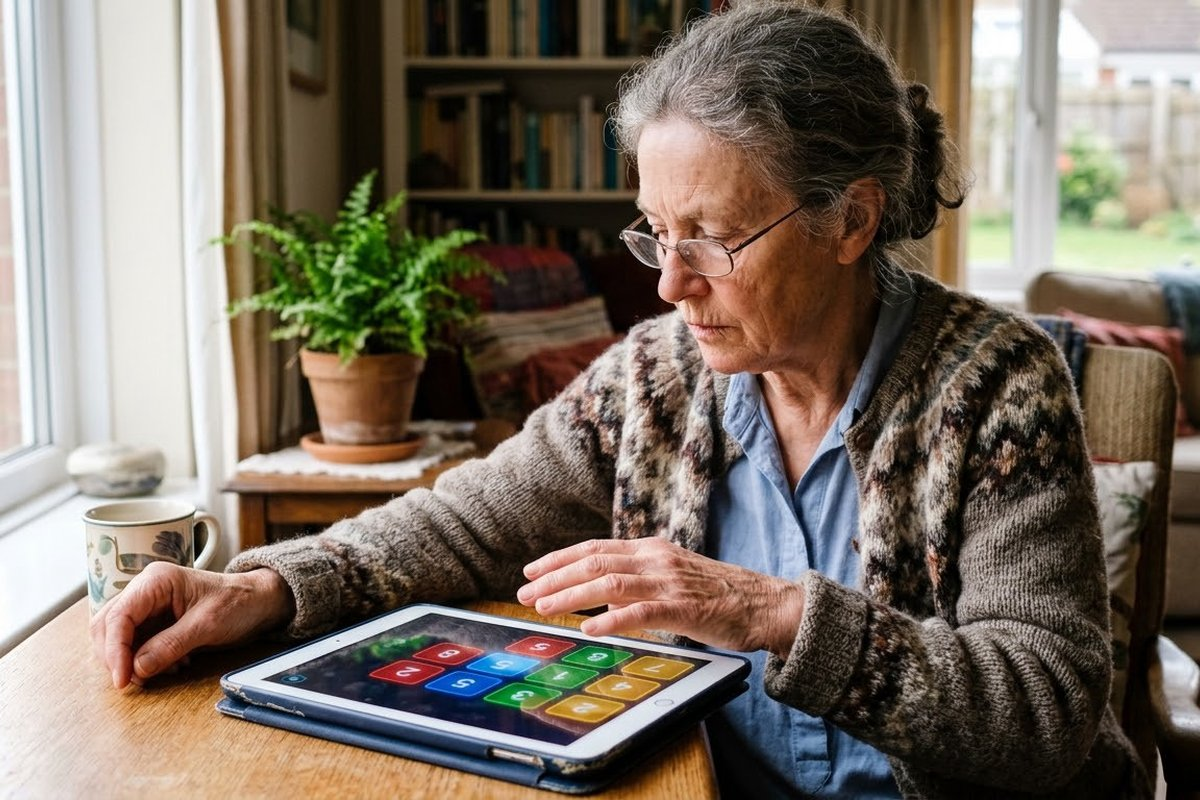
2. Sudoku. The classic number-placement puzzle trains logical deduction, pattern recognition, and working memory simultaneously — you hold candidate digits in mind while eliminating possibilities. Start with a 4×4 grid if you are new, then move up to full 9×9 Sudoku. Adjustable difficulty matters here: the goal is a challenge, not a frustration. If you want a primer, the beginner's guide on this blog covers the first moves.
3. Crosswords and word puzzles. The NEJM Evidence trial's winner. For seniors with early memory concerns, moderate-difficulty word puzzles beat computerized games on memory and daily-function measures. Crosswords train vocabulary retrieval and long-term knowledge recall — abilities that age well and reward exercise. Print or web both count; what matters is doing them several days a week.
4. Memory match games. Flipping cards to find pairs trains associative memory — remembering where things are — which is often among the first skills to feel less sharp. The memory match game lets you start with a small grid and expand as confidence grows. Naming each card out loud as you flip it adds a verbal layer that many players find helps.
5. Sequence memory (Simon-style) games. Watching a sequence of lights or colors, then repeating it, trains working memory updating — holding information while it changes. The sequence memory game is the classic version; the number sequence memory game adds a verbal-numeric channel for variety. Expect round eight or nine to sting a little. That sting is the workout.
6. Stroop-style attention tests. Naming the color of a word rather than reading the word forces your brain to suppress an automatic response — cognitive control in its purest form. The free Stroop effect test takes two minutes and reliably produces the "wait, why is this hard?" moment that means your brain is working.
7. Visual search and attention games. Spot-the-difference puzzles train visual scanning and sustained attention — the same skills you use to find keys on a cluttered table. The find-the-different-word game and the Schulte grid are the two best free options: the former adds language to the search, the latter is pure visual attention under mild time pressure.
A Realistic 15-Minute Daily Routine
Research on training consistency keeps repeating one message: frequency beats duration. Fifteen minutes daily outperforms a two-hour weekend marathon. A rotation that covers different domains might look like this:
Daily anchor (5 minutes): one reaction or Stroop round — fast, adaptive, and drawn from the most evidence-backed category.
Rotate (10 minutes): Sudoku on two days, sequence or memory games on two days, visual search on one day.
Weekly novelty: try one game you have never played. Learning a new game engages the brain differently than repeating an old favorite, and experts consistently flag novelty as the ingredient casual solvers miss.
One calibration rule: if a game stops feeling challenging, raise the difficulty. If it feels stressful, lower it. The productive zone sits right at the edge of comfortable — hard enough to demand focus, easy enough to finish without agitation. And if you keep a simple note of your scores, the week-over-week improvement becomes its own motivation.

What Brain Games Can't Do
An honesty section, because trust matters more than hype here. No game — not Sudoku, not crosswords, not the best-researched speed training — has been shown to prevent Alzheimer's disease. The large multidomain prevention trials, like the Finnish FINGER study, found their effects from combining interventions: physical exercise, vascular health, diet, social activity, plus cognitive training. Games were one tile in the mosaic, never the whole picture.
The levers with the strongest evidence remain unglamorous: regular physical movement, blood pressure control, decent sleep, and real social contact. A weekly game night with friends arguably beats a solo puzzle app — it stacks cognitive stimulation on top of social engagement in a single activity.
Play the games because you enjoy them and because the evidence, while nuanced, genuinely supports the habit. Just pair them with a walk.

FAQ
Do brain games prevent dementia?No game has been proven to prevent dementia. The strongest evidence — speed-of-processing training in the ACTIVE trial — showed a lower rate of dementia diagnosis over 10–20 years among committed participants, and observational studies link regular puzzle habits to lower incidence. But these are risk associations, not guarantees.
How long should seniors play brain games each day?About 15–30 minutes. Short daily sessions beat long weekly ones, and the first few minutes deliver most of the stimulation.
Are paid brain-training apps worth it?Be skeptical. The National Institute on Aging says commercial apps lack evidence matching clinical trials, and the FTC has already fined one major app for overclaiming. Free browser games deliver the same core activity at zero cost.
Which game should a complete beginner start with?Whichever one you will actually return to. If you want the most evidence-backed single pick, start with short reaction-speed rounds; if you prefer something slower, start with 4×4 Sudoku and work up.
Can I train my brain without a screen?Yes — crosswords in print, card games with friends, jigsaw puzzles, and learning new skills all count. The 2022 crossword trial used web-based puzzles, but the pen-and-paper version trains the same machinery.
Where can I play these games for free?iQiQGame runs all seven game types above as free browser games — from 9×9 Sudoku to the Stroop effect test — with no download and no subscription.