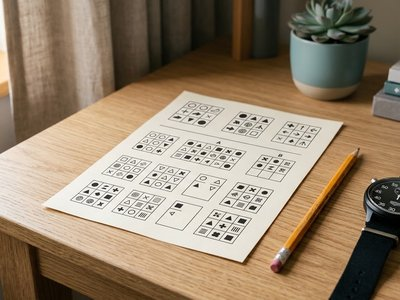
Retesting raises IQ scores by about 5 points — but the gains stop after the third attempt. What a 2018 meta-analysis of 153,185 people says about practice effects.
You have seen the ads: "Boost your IQ in 30 days." "Train your fluid intelligence in minutes a day." They promise the one thing most people secretly want — a higher number on an intelligence test.
The actual research tells a more interesting story. Yes, your score can move. But the way it moves — and the hard ceiling on how far it moves — is not what most test-prep companies want you to believe. Here is what eight decades of psychometric studies actually show, and how to use that knowledge before your next assessment.
Yes, Retaking an IQ Test Raises Your Score — Here's the Math
The practice effect is real
If you take the same style of intelligence test twice, your second score will almost certainly be higher than your first. This is not a myth; it is one of the most reliably replicated findings in psychology. Psychologists call it the retest effect (or practice effect), and it typically amounts to roughly one-third of a standard deviation — about 5 IQ points on a second sitting of a similar test.
That is a meaningful bump. Five points can move you across a percentile line, change how you feel walking into a proctored session, or — if you are near a cutoff — decide whether a score "counts."
The gains have a hard ceiling
Here is the part the ads leave out: the gains do not keep stacking. A 2018 meta-analysis by Scharfen, Peters, and Holling, published in the journal Intelligence, pooled 122 studies and 153,185 participants and found that retest gains rise sharply on the second administration, add a little more on the third — and then stop growing entirely. You can explore the full analysis on ScienceDirect.
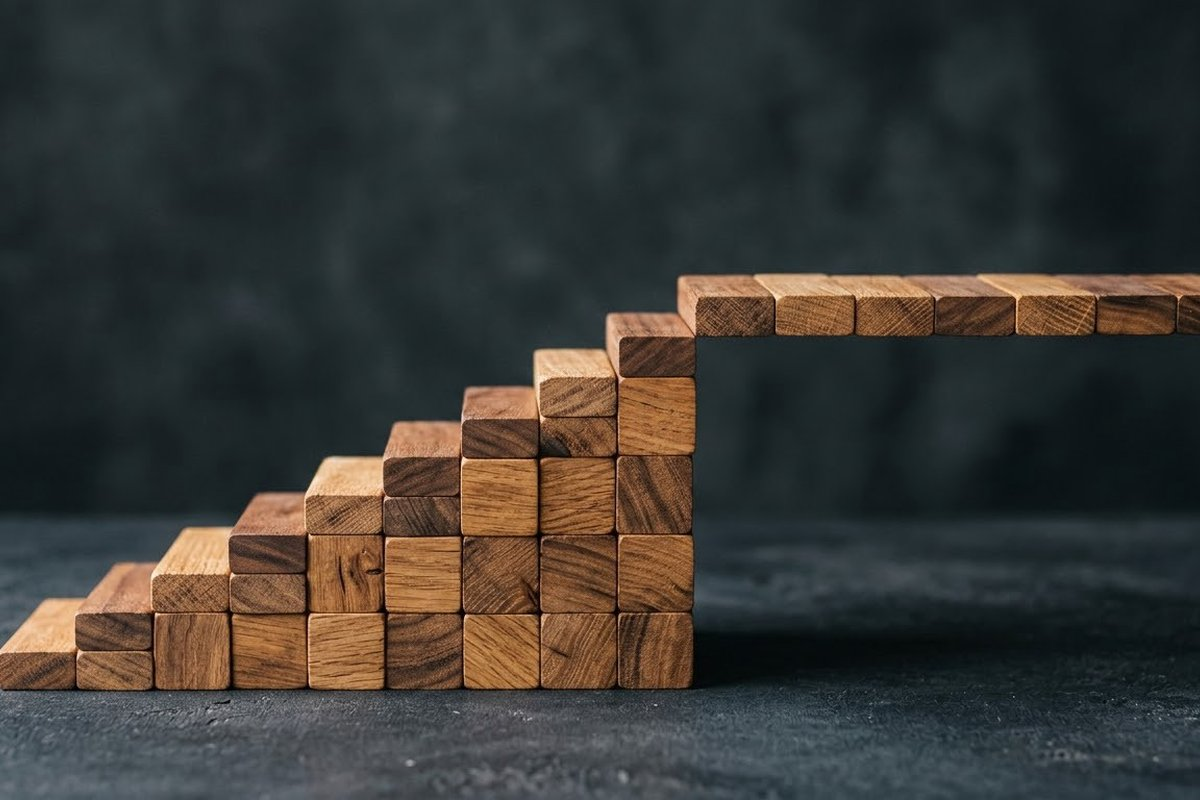
In plain terms: the first retake buys you the most points. The second buys some. The third buys nothing. No amount of additional grinding pushes the score further, because you have already extracted everything the test format can give you.
Familiarity Is Not Intelligence: What Practice Points Actually Measure
Why the gains happen
So what are those 5 points made of? Mostly logistics, not brainpower:
- Format familiarity — you stop wasting working memory decoding what a matrix item wants from you.
- Timing strategy — you learn when to skip, when to guess, when to move on.
- Anxiety reduction — a known format is a less threatening format, and stress measurably drags down test performance.
None of these change how well your brain reasons. They change how smoothly you can show your reasoning under exam conditions.
The g-loading problem
Psychometricians have a name for the deeper issue: retest gains reduce the g-loadedness of a score. The general intelligence factor g is what iq tests are trying to measure, and a fresh, unpracticed score correlates with it most strongly. Each round of practice inflates the score while inflating your actual underlying ability less and less — so a heavily practiced score is, statistically speaking, a slightly exaggerated self-portrait.
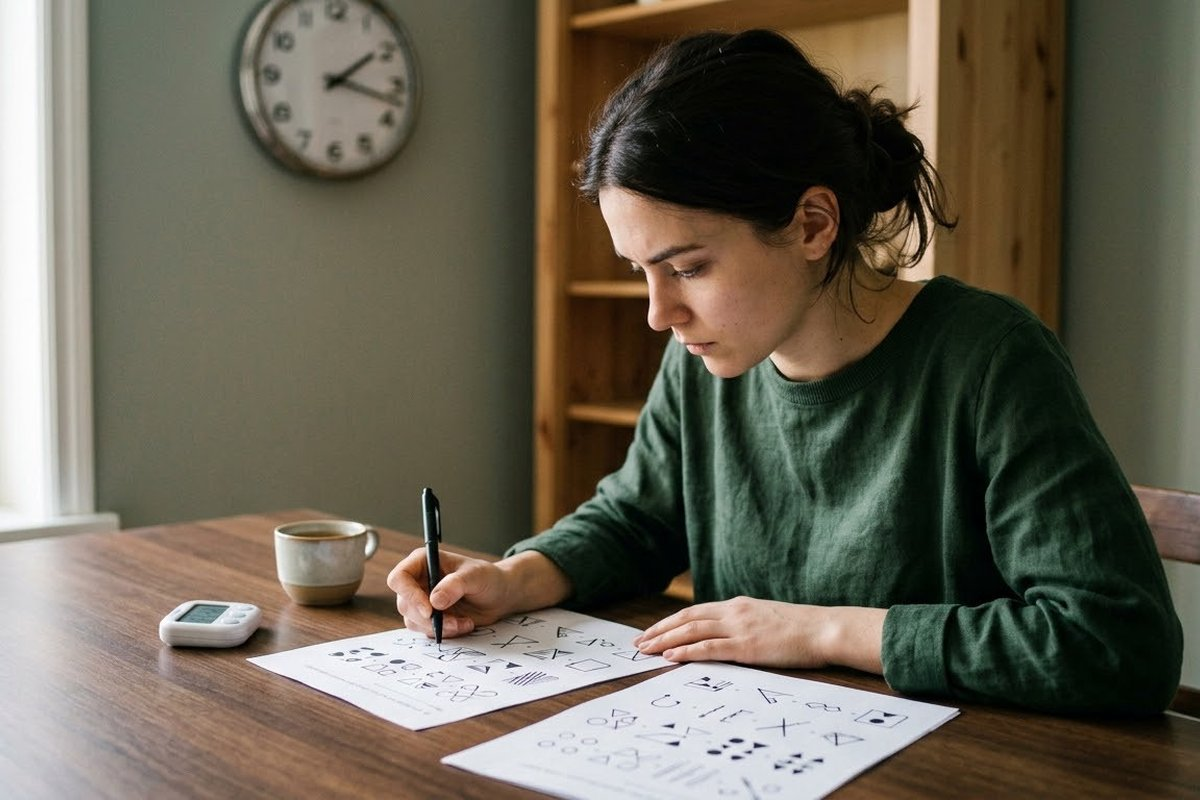
This is also why institutions treat retest scores with suspicion. Mensa, for instance, accepts only supervised, properly administered tests for admission — a practice score means nothing to them, and neither does a familiar format. Practice points are real numbers that mean less than they look.
When Long-Term Practice Does Move the Needle: The Kvashchev Experiment
Three years of daily training
Before you conclude that practice is all smoke, there is one famous result that deserves its reputation. In the 1970s and 1980s, Serbian psychologist Zoran Kvashchev ran an experiment in special boarding schools: students who had failed the regular selection process were given a three-year, daily, intensive program of demanding cognitive exercises — competing tasks, novel problems, multiple domains.
The results, reanalyzed in a study preserved by the U.S. Department of Education's ERIC database, showed substantial gains across 28 different measures of intelligence, on a sample of nearly 300 students with random assignment to treatment and control classes. You can read the reanalysis, "We Can Boost IQ: Revisiting Kvashchev's Experiment," on the ERIC archive. The effect was large enough that researchers still argue about it decades later.

The catch: intensity and duration
Notice what that protocol actually was: years, not weeks. Daily, not occasionally. Multiple demanding task types, not the same puzzle repeated. This is the opposite of a brain-training app session on the commute. Kvashchev's students were not "practicing a test" — they were rebuilding their reasoning habits across hundreds of hours of varied, effortful work.
The honest summary: short-term practice buys familiarity; long-term, varied, intensive training can buy genuine capability. The second option is dramatically more expensive, which is exactly why the first option dominates the app store.
What Reliably Raises the Floor: Education's 1–5 Point Rule
The largest natural experiment we have
If intensive training can move ability and casual practice only moves scores, is there anything in between that is proven, repeatable, and available to everyone? There is: education.
In 2018, Stuart Ritchie and Elliot Tucker-Drob published a meta-analysis of 42 datasets covering more than 600,000 participants, using three study designs that can separate causation from selection: controlled longitudinal studies, compulsory-schooling policy changes, and school-entry-age cutoffs. Their conclusion, available full-text on PubMed Central: each additional year of education raises intelligence test scores by roughly 1 to 5 IQ points, and the effect persists across the lifespan — it does not wash out in adulthood. Their words: education is "the most consistent, robust, and durable method yet to be identified for raising intelligence."
What this means for you
The mechanism is worth copying even if school is behind you. Education works because it is:
- Sustained — months and years, not sprints
- Varied — new domains force new mental models
- Effortful — it sits at the edge of what you can currently do
Learning a language, working through mathematics, even systematically mastering a new skill with real feedback — these are education's cousins. They raise the floor that your test score stands on, instead of just tilting the snapshot.
A Smart Way to Prepare (and Train) That Respects the Science
Practice the format, not the answers
If you have a real assessment coming up, preparation is legitimate — it removes barriers between your actual ability and the score you record. The evidence-based approach: practice question formats, never memorized answers. Matrices, number sequences, verbal analogies, figure rotations — knowing the grammar of each format is exactly what the retest effect is made of, and IQ test question types follow patterns you can study (we break down the eight major formats in our IQ test question types guide).
Mensa itself offers a free online IQ Challenge for exactly this purpose — and states plainly that it is for practice and entertainment, and cannot qualify you for membership. That is the right mental model: practice tests calibrate you; they do not certify you.

A 7-day prep framework
A simple, research-aligned week:
- Days 1–2: Baseline + format study. Take one full practice test cold. Note which question types cost you the most time.
- Days 3–4: Targeted drilling. Work only your weakest format — 25–30 focused minutes a day. Beyond that, fatigue sets in and the extra reps mostly train errors.
- Day 5: Working-memory training. The Raven-style matrices famously load on working memory, and tasks like N-Back train exactly that system.
- Day 6: Light, varied puzzles. Games like 2048 or sudoku keep reasoning warm without fatigue — varied puzzle play is closer to Kvashchev's multi-task protocol than more test drills would be.
- Day 7: Rest. Sleep consolidates the skills you practiced. A tired brain forfeits the points a fresh brain would earn.
- Test day: full warm-up with a few easy items, then go.
Expectation management
Set the right targets: a practiced retake might realistically add 3–7 points, gains vanish by the third attempt, and no amount of practice crosses a genuinely higher ability tier. If your goal is Mensa's 98th-percentile threshold, practice alone will not carry you there — sustained learning might, over the years. For a deeper dive into what the numbers themselves mean, see our guide to IQ score ranges and percentiles.
The Takeaway: Your Score Has a Ceiling; Your Brain Doesn't
An IQ score is a photograph, not a biography. Practice can sharpen the photo by a few points — the retest research is unambiguous about that — but the picture is still of the same person. The durable levers are the slow ones: real education, sustained varied training, and habits that build reasoning rather than rehearse it.
So take the practice test. Learn the formats. Then spend the rest of your training time on things that actually compound. When you are ready, the free IQ games and brain-training puzzles on iQiQGame are a good place to put the science to work.
References
- Scharfen, J., Peters, J. M., & Holling, H. (2018). Retest effects in cognitive ability tests: A meta-analysis. Intelligence, 67, 44–66.
- We Can Boost IQ: Revisiting Kvashchev's Experiment (ERIC — U.S. Department of Education)
- Ritchie, S. J., & Tucker-Drob, E. M. (2018). How Much Does Education Improve Intelligence? A Meta-Analysis. Psychological Science, 29(8), 1358–1369.
- Mensa International — The Mensa IQ Challenge (official practice test)