Learn the four-move framework that solves almost any 24 game hand: factor pairs, landmark math, the 1-and-0 rescue, and the fraction trick for 3,3,8,8.
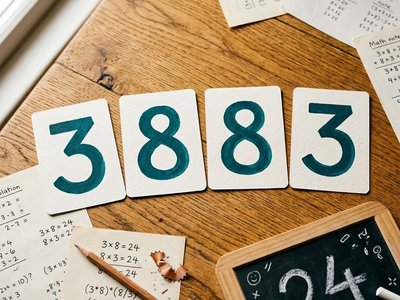
The 24 game looks innocent. Four numbers, four operations, one target. Then someone deals you 3, 3, 8, 8 and two minutes later you're still staring at the table, quietly convinced the puzzle is broken. It isn't — it just needs a different kind of thinking.
After thousands of hands — first with a real deck of cards, now on our free Calculate 24 game — the biggest jump in my own solving came from quitting random guesses and switching to a framework. This guide walks through that framework, from the basic rules to the fraction tricks that crack the famous "impossible" hands.
What Is the 24 Game? The Rules in 30 Seconds
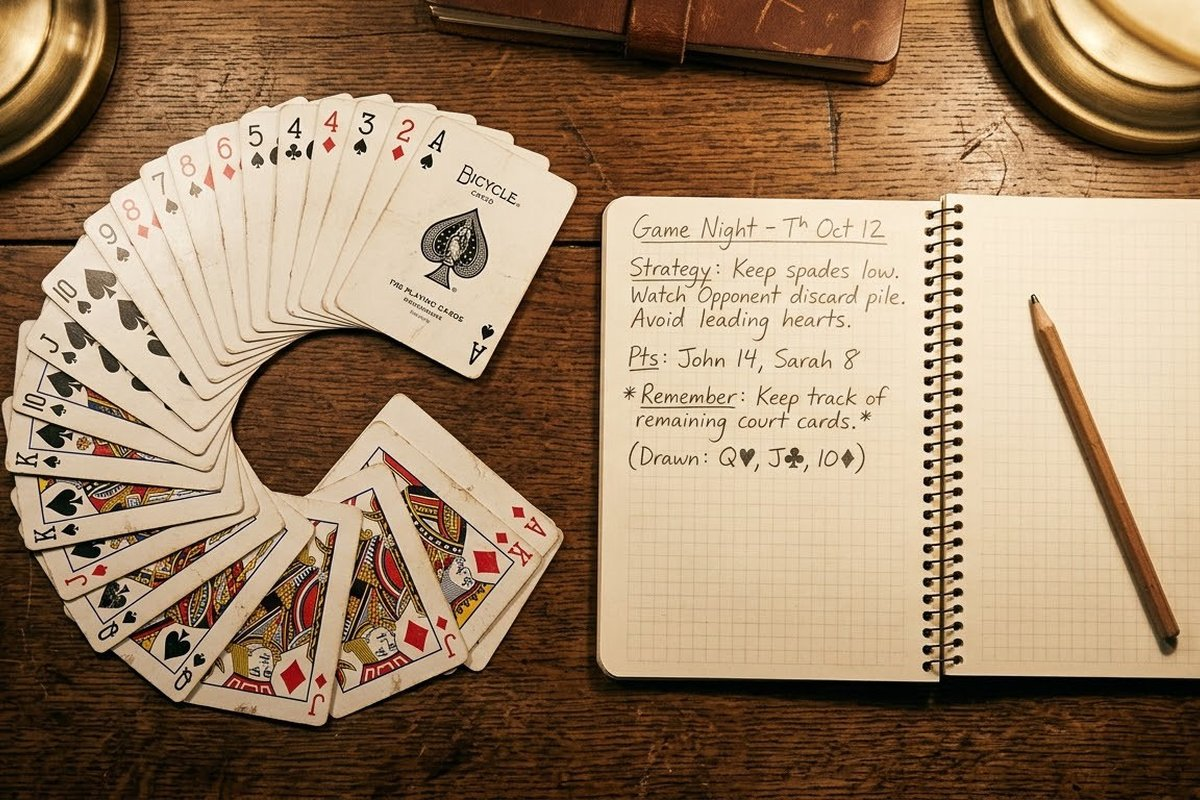
The classic 24 game gives you four numbers, usually between 1 and 13 (matching playing card values, where Jack is 11, Queen is 12, King is 13). Your job is to combine all four using addition, subtraction, multiplication, and division — parentheses allowed — so the final result is exactly 24.
Three rules matter:
- Every number must be used exactly once. Writing 5 × 5 − 1 = 24 for the hand 1, 5, 5, 5 fails, even though the arithmetic is right, because one of your 5s never showed up.
- Any grouping is allowed. Parentheses override the normal order of operations, and using them well is half the game.
- Not every hand has a solution. Roughly 79% of random four-number hands from a standard deck can reach 24. Recognizing a dead hand quickly is a skill, not a failure.
The game's modern life started in classrooms: Robert Sun commercialized the 24 Game in 1988 as a math enrichment tool, and it spread through school competitions across the United States and beyond. The underlying puzzle is older — it traces back to informal card-table play, where players drew four cards and raced to make 24.
Why 24 Is the Perfect Target Number
Why 24 and not, say, 23? It's not an accident, and understanding it will make you a better solver.
24 has more useful factor pairs than almost any number its size. You can build it as 1 × 24, 2 × 12, 3 × 8, or 4 × 6. That gives you four completely different multiplication routes to the target, which is why factor-hunting is the backbone of every good strategy.
24 also sits near friendly landmarks. It's 25 − 1, 27 − 3, 30 − 6, 20 + 4. When multiplication stalls, those nearby numbers give you subtraction and addition routes. A target like 23 — a prime with no small factor pairs — would make the game dramatically harder and less fun.
Every strategy below is an exploitation of these two facts: many ways to multiply into 24, and many ways to add or subtract toward it.
The Core Framework: Four Moves That Cover Most Hands
When a new hand hits the table, don't shuffle operations at random. Run this checklist in order — it resolves the large majority of solvable hands.
Move 1: Hunt for factor pairs
Scan your four numbers for anything that multiplies to 24 directly: a 3 and an 8, a 4 and a 6, a 2 and a 12. If you hold both members of a pair, use the other two numbers to make a 1 (multiply by it) or a 0 (add it).
Example with 3, 8, 2, 2: you have the 3 × 8 pair. The leftover 2 and 2 make 2 ÷ 2 = 1, so 3 × 8 × (2 ÷ 2) = 24.
If you have only one member of a pair, ask what the other three numbers could build into the partner. Holding a 3? Try to make an 8 from the rest — say (a + b − c) or (a × b − c).
Move 2: Aim at addition and subtraction landmarks
When multiplication doesn't click, look for two numbers (or two mini-expressions) that add to 24, or an expression that overshoots and subtracts down: 25 − 1, 27 − 3, 28 − 4, 30 − 6, 36 − 12.
Example with 4, 9, 9, 10: 9 + 9 + 10 = 28, and 28 − 4 = 24. So 9 + 9 + 10 − 4 = 24.
Move 3: The 1-and-0 rescue
The single most useful habit in the game. If three of your numbers already produce 24, stop forcing the fourth into the expression. Turn the fourth into a neutral element instead: pair it with something to make 1 (for multiplication) or 0 (for addition/subtraction).
Example with 3, 4, 4, 8: the 3 and 8 make 24 directly. The two 4s cancel — 4 − 4 = 0. So 3 × 8 + 4 − 4 = 24.
Move 4: Work backwards from 24
Stuck? Flip the direction of your thinking. Pick one of your numbers and ask: "What would I need from the other three to finish with 24?" Holding a 5, you'd need 29, 19, or 120 from the remaining three (since 29 − 5, 19 + 5, and 120 ÷ 5 all land on 24). Then check whether those sub-targets are buildable. Reverse-engineering turns one open-ended search into three concrete mini-puzzles.
Run these four moves in order and most standard hands fall within seconds. What about the ones that survive the checklist? That's where the next section comes in.

When Nothing Works: The Fraction Play
There's a family of hands that defeats every whole-number strategy. The most famous is 3, 3, 8, 8. Try every factor pair, every landmark — nothing lands. The solution requires making a fraction first:
8 ÷ (3 − 8 ÷ 3) = 24
Work it inside out: 8 ÷ 3 gives 8/3. Then 3 − 8/3 = 1/3. Finally 8 ÷ 1/3 = 24. The trick is building a small denominator (here, 1/3) and dividing by it, which multiplies by its reciprocal — a leap that pure integer thinking never reaches.
Two more classics worth memorizing, because the pattern repeats:
- 1, 5, 5, 5: 5 × (5 − 1/5) = 24. Same denominator-building move — 5 − 1/5 = 24/5, times 5.
- 1, 3, 4, 6: 6 ÷ (1 − 3/4) = 24. Build 1/4, divide.
The general lesson: when a hand resists all four framework moves, deliberately try a division that produces a fraction, then use that fraction inside a subtraction to manufacture a clean small number. It feels illegal the first time. After that, it becomes your favorite weapon.

Common Mistakes That Cost You Seconds
Watch any beginner play for five minutes and the same three errors repeat:
- Ignoring the "use each number once" rule under pressure. It's the most common invalid answer in classroom competitions. Before you shout a solution, count your numbers — all four, exactly once.
- Tunnel vision on multiplication. Factor pairs are the right first move, but players who only multiply miss the huge family of solutions built on 25 − 1 or 30 − 6. If multiplying stalls for more than a few seconds, force yourself to switch to the landmark move.
- Grinding unsolvable hands. About 458 of the 1,820 possible four-card hands from a standard deck have no solution — including 1, 1, 1, 1 and anything whose sum is under 9. If a hand resists the full framework and the numbers are tiny or awkward, the fastest move is to recognize the dead hand and move on. In timed play, knowing when to quit is worth as much as knowing how to solve.
One bonus tip: handle duplicate numbers early. Two matching numbers narrow the search space fast — decide immediately whether they'll cancel (making 0 or 1) or work together (like 8 ÷ 8). Leaving duplicates for last clutters every branch of your search.
How to Get Faster: A Simple Practice Routine
Speed comes from pattern recognition, and pattern recognition comes from volume with structure. Here's the routine:
- Week 1–2, Starter hands (numbers 1–9): Play 20 hands a day using only Moves 1 and 3. At this level, factor pairs and the 1-and-0 rescue solve nearly everything. The goal isn't speed — it's making the factor-pair scan automatic.
- Week 3–4, Standard hands (1–13): Add Moves 2 and 4. Practice the landmarks deliberately: every time you see a 10 or a 12, ask what pairs with it. Aim for a solve in under 30 seconds.
- Ongoing, expert play: Add the fraction play. Solve the three classic hands above from scratch without looking, then hunt for new ones on your own.
Run this routine on our free Calculate 24 game — it deals unlimited random hands and works on a phone. Ten focused minutes a day beats an hour of distracted play; most people hit sub-20-second solves on standard hands within a few weeks.
The mental math carries over, too. Regular play sharpens arithmetic fluency, feel for order of operations, and instinct for how numbers decompose — the same skills that make everyday math faster.

FAQ
Is every 24 game puzzle solvable? No. Roughly 79% of random four-number hands (values 1–13, repeats allowed) have at least one solution. Around 458 of the 1,820 possible hands cannot reach 24.
Who invented the 24 game? The puzzle grew out of card-table play in Chinese communities in the mid-20th century. Robert Sun commercialized it as an educational card game in 1988, and it became a staple of school math competitions.
What is the hardest 24 puzzle? The most famous is 3, 3, 8, 8, solved only with nested division: 8 ÷ (3 − 8 ÷ 3) = 24. Hands like 1, 5, 5, 5 and 1, 3, 4, 6 use the same fraction trick.
Can you use each number only once? Yes — every number must appear in your expression exactly once, and only the four operations +, −, ×, ÷ are allowed (plus parentheses).
Does the 24 game actually help your math skills? It builds mental arithmetic fluency, order-of-operations intuition, and pattern recognition — which is why teachers have used it in classrooms for decades.
Ready to test the framework? Play Calculate 24 free and see how fast you can clear a hand.
References
- MiniWebtool — 24 Game Solver & Trainer: https://miniwebtool.com/24-game-solver-trainer/
- Baidu Baike — 24点游戏 (solvability statistics, history): https://baike.baidu.com/item/24%E7%82%B9%E6%B8%B8%E6%88%8F
- Daily Logic Games — How to Win at Make 24: https://dailylogicgames.com/blog/how-to-win-make-24-strategies
- 24-point.com — The Origins of the 24 Game: https://24-point.com/articles/history-of-24-game.html