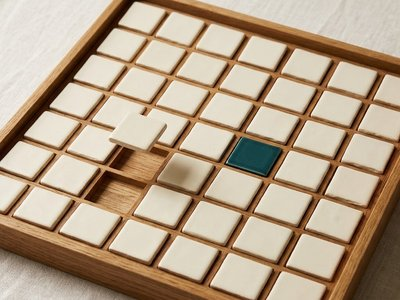
The corner strategy turns 2048's 16 tiles into one ordered snake. Learn the exact setup, 5 rescue tactics, and the math behind the merge chain.
Most people play 2048 like a slot machine. They swipe fast, chase merges, and hope the tiles fall their way. Then they die at 512, restart, and blame the spawn.
Luck has almost nothing to do with how 2048 ends. The game has 16 squares, every swipe adds a tile, and every swipe you spend on a bad merge hands that new tile more room to grow. That is the whole game: space management wearing a puzzle costume.
Players who consistently reach 2048 do one thing differently. They pick a corner early, build an ordered chain around it, and refuse to touch the arrow that breaks the chain. This guide covers the full system — the corner setup, the snake pattern, five tactics for rescuing bad boards, and the math that explains why your grid always seems to fill up faster than you planned.
The Rules That Actually Matter
If you have finished a few runs, skip ahead. Otherwise, here is the 30-second version.
The board is a 4×4 grid of 16 squares. Swipe, and every tile slides as far as it can in that direction. Two tiles with the same number merge into one tile of double the value. After each swipe, the game drops one new tile into a random empty square — a 2 about 90% of the time, a 4 about 10%. You win by creating 2048. You lose when the board is full and no two neighbors match.
The 90/10 split comes straight from the original 2014 code by Gabriele Cirulli, and it shapes every decision you make. Most swipes you plan against 2s. But one in ten swipes drops a 4 into a square you were saving, which is why disciplined players keep buffer space instead of packing the board tight.
The second rule matters more than it looks. Sliding costs nothing. Consequences are not free. Every swipe that fails to improve your structure adds a tile to a board with a fixed 16-tile budget. That budget is why order beats speed.
Pick a Corner. Never Let Go.
The corner strategy works because of what the corner does to your biggest tile: it turns one tile into an anchor.
A tile sitting in a corner only needs to be protected from five directions instead of eight. Put your 512 in a corner and the board reorganizes around a simple question — what can merge toward it? Put that same 512 in the middle of the board and every swipe risks shoving it somewhere worse, forcing you to spend moves rescuing it instead of building.
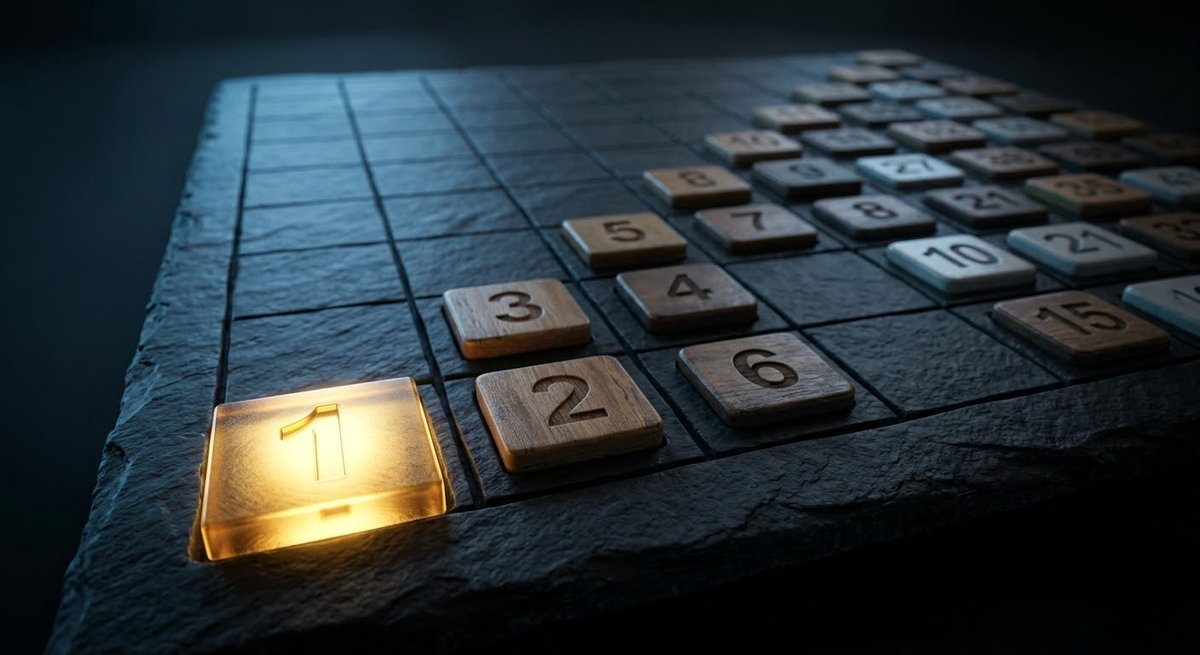
So choose one corner before your first swipe. The rest of this guide assumes the bottom-left corner, because the logic reads cleanly left-to-right. If you prefer another corner, mirror every instruction.
Here is the commitment that separates 2048 runs from 2048 games: once the corner is chosen, you stop using the arrow that pulls tiles away from it. Bottom-left anchor means "up" is off the table. Not "rarely" — off the table. Every "up" swipe drags your anchor tile out of position, and dragging it back costs three or four moves you did not have.
The Snake: How to Order the Whole Board
The corner is the anchor. The snake is the chain that hangs off it, and the chain is what actually wins games.
Building the snake, step by step
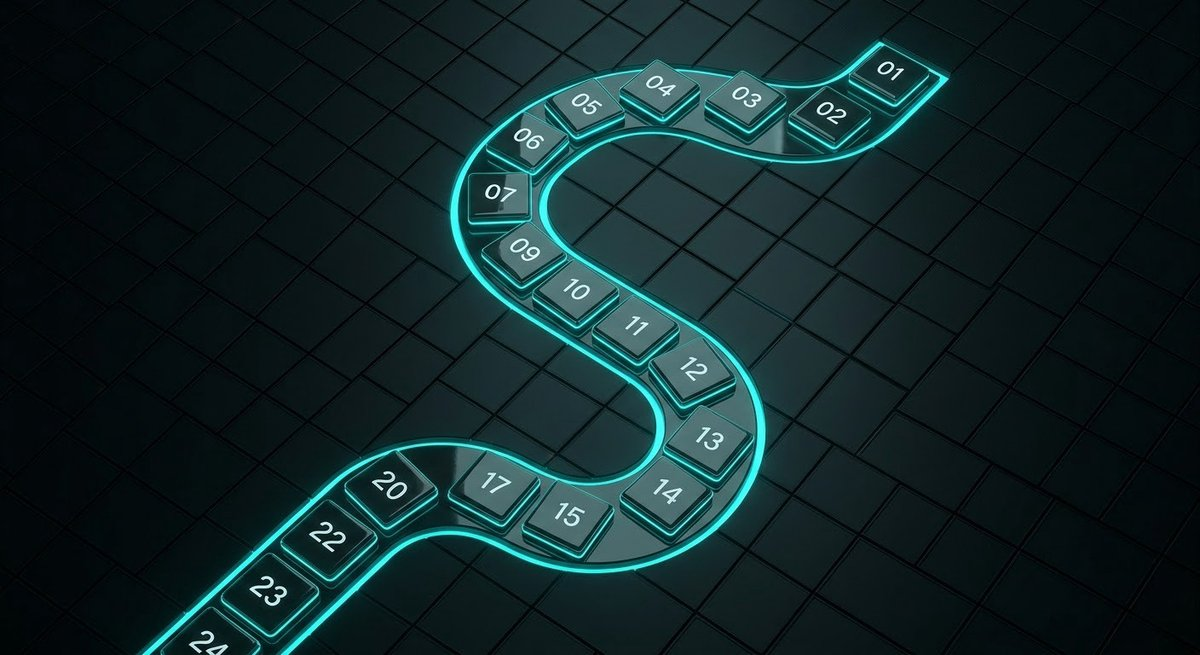
With the bottom-left corner chosen, your goal is a board that reads like a snake: the bottom row runs left-to-right from biggest to smallest, the row above it runs right-to-left continuing the descent, and so on upward until you run out of tiles.
Say your biggest tiles are 256, 128, and 64. The bottom row wants to look like this:
[256] [128] [64]  [16]
 [ ]  [  ]  [ ]  [ 8]
The 256 sits in the bottom-left corner. The 128 and 64 sit to its right in strict descending order. When two 32s merge into a 64, that new 64 has a home waiting next to the old one.
Why merging preserves the order
This is the part that makes the snake more than a tidy habit. In a properly ordered snake, merges happen at the end of the chain, and the product of a merge slides back into the chain without disturbing anything ahead of it.
Two 32s merge into 64. That 64 now sits beside the existing 64. They merge into 128, which sits beside the 128. The chain consumes its own tail and keeps its shape. One good swipe can cascade 32 → 64 → 128 → 256 all at once, and the board ends up neater than it started.
Contrast that with a random board, where a fresh 64 usually lands next to nothing useful. Order is not cosmetic. Order is what turns one lucky spawn into a three-level cascade.
Five Advanced Tactics
1. Lock the bottom row first
A full row cannot receive spawns. Fill your bottom row and keep it descending, and the random tile can only appear above it — where your structure can absorb the surprise. An empty slot in the bottom row is an invitation for the game to drop a 4 exactly where your 8 was supposed to slide. Freeze the row early and it stays frozen.
2. Live on two arrows, mostly
With a bottom-left anchor, "left" and "down" do all the daily work. They compress tiles toward the anchor without ever disturbing it. "Right" has one legitimate job: packing the bottom row tight when it develops gaps. "Up" has none. Runs die at the moment a player habitually flicks upward for one convenient merge, the anchor walks out of its corner, and three moves later the whole snake needs surgery.

3. Merge in pairs, not in panic
Beginners see two 64s anywhere on the board and start swiping immediately. Strong players first answer a cheaper question: which path brings these two tiles together without breaking the snake? Sometimes the answer is one swipe. Sometimes it is four. If the path costs more moves than the merge returns, decline the merge and keep building. Every swipe should end with the board more ordered than it started — or it was a bad swipe.
4. The rescue: freeing a trapped big tile
Sooner or later a big tile gets pushed off its post. The instinct is to swipe up and fix it directly. Do not. Swiping toward the anchor pulls everything else out of line to move one tile.
The rescue works from the other side. Give the stranded tile a slide path back by clearing squares between it and its home. Build small merges on the far side of the board — the side away from the anchor — and let the empty squares propagate toward the trapped tile. Once a corridor opens, two or three swipes walk it home. It feels slower. It is faster, because the snake survives.
5. Break the pattern only at the end
Near the end of a run the board is crowded, maybe 14 tiles deep, and the strict two-arrow discipline starts producing dead swipes. This is the one phase where using your forbidden arrow is correct. When the alternative is game over, spend the "up" swipe, survive the spawn, and spend the next two swipes rebuilding the snake. Breaking order deliberately once is a tool. Living in broken order is the mistake.
Four Habits That End Runs Early
- Chasing merges. A visible pair is not a command. Merges that destroy structure to gain 64 points cost you the 2048.
- Going fast. The swipe is free; ask what the board looks like after it. One extra second per swipe is the cheapest skill upgrade in the game.
- Forgetting the 4. One swipe in ten spawns a 4 into your planned empty square. Keep one buffer square on the snake's open end and the surprise lands somewhere harmless.
- Rebuilding from the middle. When the snake collapses, players patch the mess tile by tile. Stronger play: pause, rebuild the bottom row first, then re-extend the chain upward. Rows before details.
The Math: Why Your Board Fills Up So Fast
Here is why 2048 feels tight even when you are playing well.
Creating the 2048 tile means accumulating 2048 points of face value — the equivalent of 1,024 "2" tiles — inside one square. Each swipe spawns an expected 2.2 points of new value (0.9 × 2 + 0.1 × 4). Even in a perfect game with zero wasted swipes, that works out to roughly 930 swipes before the 2048 exists. Your real runs will need more, because every rescue and every declined merge still spawns tiles.
Now the squeeze: merging two tiles into one removes a square, but the swipe that did the merging immediately adds a new tile back. Net gain: zero squares. The only way the board gains breathing room is a single swipe that merges two pairs at once. That is the mathematical heart of the corner strategy — the snake exists to stack same-value neighbors together so that double-merges happen often. You are not building order for aesthetics. You are manufacturing the only event that produces space.

Start With One Corner
Do not try all of this in your next run. Pick the bottom-left corner, keep "up" banned, and build the bottom row descending. That alone will carry you past 1024. The snake, the two-arrow discipline, and the rescue routine will layer in naturally once the corner habit sticks — and the board that used to fill up on you will start filling up for you.