Learn how to improve reaction time with 7 science-backed methods: action games, anticipation drills, sleep, caffeine timing, and a 4-week training plan. Plus average reaction time benchmarks by age.
You click the moment the screen turns green — and the timer reads 310 ms. Your friend clicks at 240. Is your friend just born faster, or did they do something you didn't?
Reaction time is not a fixed trait. Age and genetics set the edges of the map, but within those edges there's a lot of room to move. Research on action video game players found they respond about 11–12% faster than non-gamers across a wide range of tasks — without making more mistakes. Sleep, caffeine, warm-ups, and the type of practice you do can each shift your score by 10 to 50 milliseconds. Stacked together, that's the gap between an average score and an elite one.
Below: what reaction time actually measures, what a good score looks like for your age, the seven methods with real evidence behind them, and a 4-week plan to put it all together.
What Reaction Time Actually Measures (And Why It's Trainable)
Reaction time is the gap between a stimulus appearing and your response beginning. Three things happen in that window: your senses detect the stimulus, your brain processes and decides, and your muscles execute. A simple visual reaction time test — click when the screen changes color — measures the whole pipeline.
Two distinctions matter for training:
- Simple reaction time is one stimulus, one response. See green, click. This is what most online tests measure, and it's mostly limited by neural conduction speed and attentional readiness.
- Choice reaction time is multiple possible stimuli, multiple possible responses. Which light flashed? Which key do I press? This adds decision-making on top of perception, and it's where practice has the most room to work.
Also worth knowing: reaction is not the same as reflex. A reflex (like your knee jerking at the doctor's office) bypasses the brain entirely. Reaction time involves conscious perception and decision, which is exactly why it responds to training.
First, Know Your Baseline (And What "Good" Looks Like)
Before training, measure. The average human reaction time on a large online click test is around 273 ms (median), while lab measurements of simple visual reaction time typically land around 200–250 ms. Age shifts the number considerably:
| Age range | Average simple visual RT |
|---|---|
| 13–17 | ~248 ms |
| 18–24 | ~231 ms (peak) |
| 25–34 | ~242 ms |
| 35–44 | ~259 ms |
| 45–54 | ~282 ms |
| 55–64 | ~305 ms |
| 65+ | ~332 ms |
(Data from large public reaction time test datasets filtered to desktop users; lab studies such as MindCrowd, with over 75,000 participants, show a similar curve.)
A few things this table doesn't tell you, but should:
- Within-age variation is huge. A fit, well-rested 50-year-old routinely beats a sleep-deprived 25-year-old. Age explains only a fraction of the differences between people.
- Device matters more than you think. Touchscreen users average roughly 36 ms slower than desktop mouse users, and wireless mice add a few milliseconds over wired. A 60 Hz monitor can add up to ~16 ms of display latency versus a high-refresh panel. Compare yourself to yourself, on the same setup.
- Take 3–5 attempts and use the median. A single click is mostly luck.
You can get a clean baseline in about a minute on a reaction speed test. Note the median, the device, and the time of day — you'll retest under the same conditions.
The 7 Science-Backed Ways to Improve Reaction Time
1. Play fast-paced action games
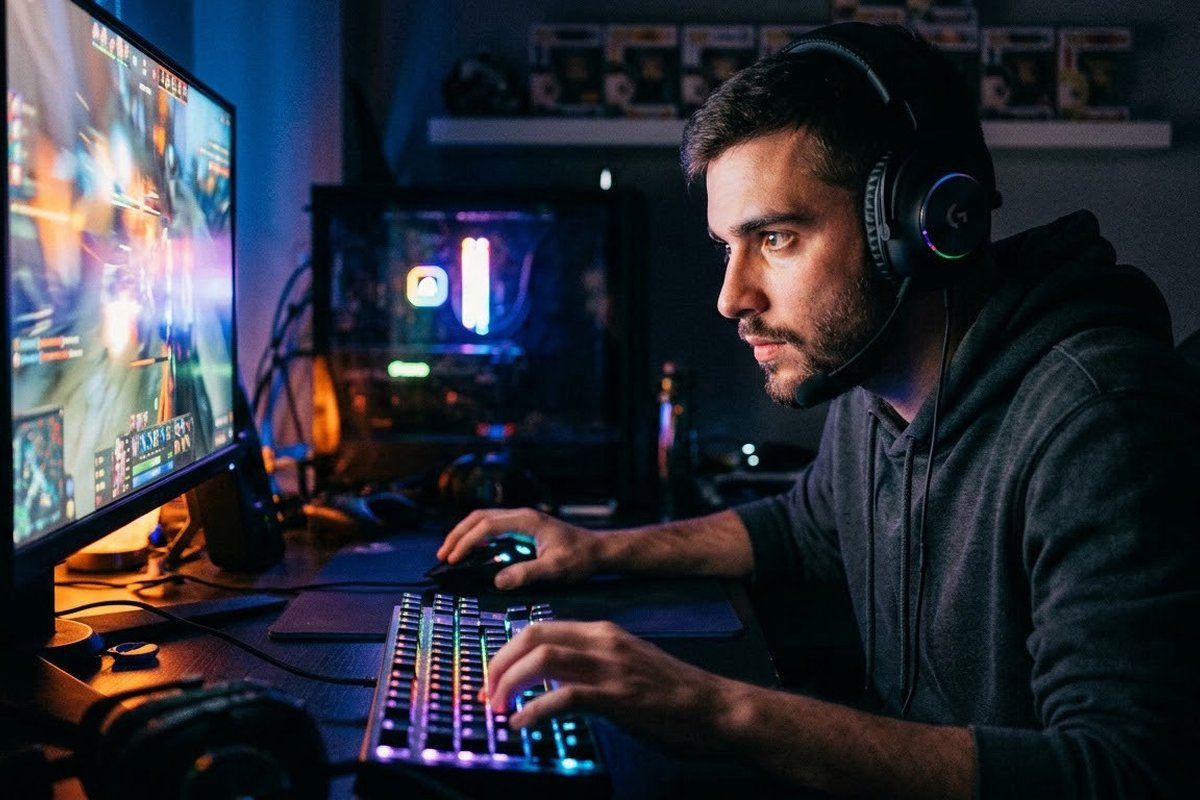
This is the most robust finding in the field. A review by Dye, Green, and Bavelier of 89 experimental conditions found action gamers responded about 11% faster than non-gamers, with virtually identical accuracy — ruling out the "trigger happy" explanation. Training studies back it up causally: non-gamers who played 50 hours of fast-paced action games over 8–9 weeks became significantly faster at tasks unrelated to gaming, while a control group playing a slow strategy game did not.
The likely mechanism is efficient information sampling: action gamers accumulate visual evidence for decisions faster, so they reach the "decide now" threshold sooner.
How to apply: any game that forces continuous rapid decisions under time pressure works — aim trainers, rhythm games, fast puzzle-reaction hybrids. Even 30–45 minutes a few times a week counts. Our sequence memory and reaction speed test games train the same circuit deliberately.
2. Train anticipation, not just reaction
A large part of "fast" is knowing when to expect the stimulus. Skilled sprinters don't react to the gun; they anticipate it within the legal window. Researchers call this temporal expectation, and it measurably shortens reaction time because your brain pre-loads attention before the event.
How to apply: practice with metronomes (respond to every fourth beat, then randomize), ball drops (have a partner drop a ball at irregular intervals), or any drill where timing prediction is part of the game. This is why the "catch the falling ruler" test gets easier with practice — you're learning the rhythm, not growing new neurons.
3. Train choice reaction, not just simple reaction
Grinding the same simple click test makes you better at that test — a classic near-transfer effect with a steep ceiling. Choice reaction training, where you must identify which stimulus appeared and pick the right response, builds decision speed that carries over more broadly.
How to apply: use drills with random targets: color-matching presses, Go/No-Go cards (respond to one color, freeze on another), or whack-a-mole style games. Vary the stimuli every session. The rule of thumb: if you can predict the next trial, the drill has stopped training choice reaction.
4. Fix your sleep debt first
This is the cheapest, biggest lever. A single night of 5–6 hours of sleep slows reaction time by roughly 30–50 ms — equivalent to aging 15–20 years overnight. Chronic short sleep degrades attentional control, and no drill outruns it. Sleep is also when the brain consolidates what you practiced, so cutting sleep to train more is actively counterproductive.
How to apply: 7–9 hours, consistent schedule. And don't test yourself right after a bad night — you'll just record a fake ceiling.

5. Use caffeine strategically (not habitually)
Caffeine reliably improves reaction time by about 10–20 ms at moderate doses (100–200 mg, roughly one to two cups of coffee), peaking around 45 minutes after intake and lasting several hours. Two caveats keep it honest: the effect shrinks with daily tolerance, and it doesn't stack — more is not faster, and jitters slow you down.
How to apply: save caffeine for when measured speed actually matters (a testing session, a competition), rather than relying on your fourth cup to feel normal.
6. Warm up your nervous system
About 20 minutes of moderate cardio immediately before testing improves reaction time by 10–15 ms, and a few minutes of easy task practice adds more on top. Athletes warm up before sprinting; your nervous system deserves the same courtesy. Attention and arousal are state-dependent — a cold brain at rest is measurably slower than a warm one.
How to apply: before a session or match, do 5–10 minutes of light movement plus a couple of low-stakes rounds of whatever you're about to do. Never let your first attempt be the one that counts.
7. Upgrade the slowest link: your hardware
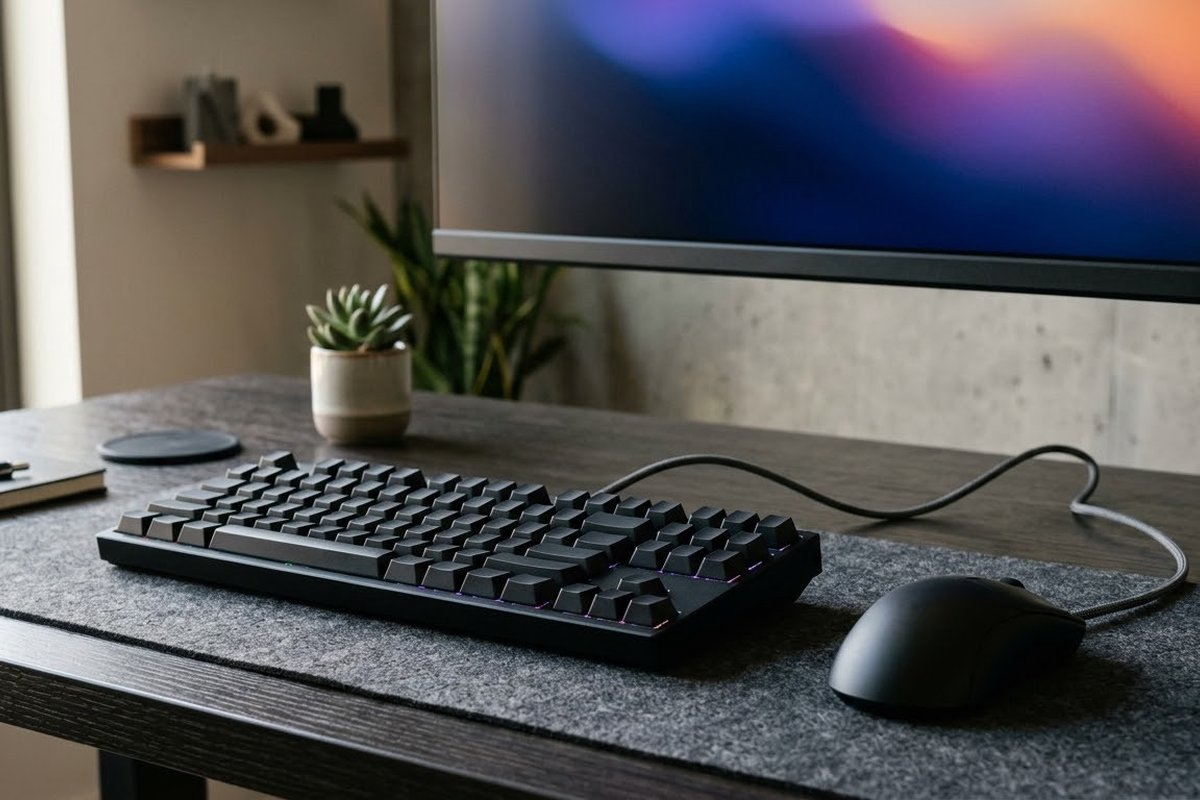
A chunk of your "reaction time" isn't biological. Bluetooth mice add 5–30 ms of latency over wired, touchscreens add ~36 ms over a mouse, and low refresh rate displays delay when you even see the stimulus. None of this makes your brain faster, but it absolutely changes your score — and in competitive gaming, it changes outcomes.
How to apply: wired mouse, higher refresh rate display, browser tab cleaned up. If your goal is "how to improve reaction time for gaming," this is the fastest 30 ms you'll ever buy. But do your baseline testing on the same rig, before and after, or you're comparing apples to a different, better apple.
What Doesn't Work (Skip These)
- Passive brain-training apps promising reflexes. The gains from generic app-based training are task-specific and modest; several companies have been fined for overclaiming. Deliberate practice on speeded tasks beats passive tapping.
- Grinding one single test for hours. You'll get faster at that exact test, then plateau. Variety transfers; repetition memorizes.
- "Eye exercises" for reaction speed. Your eyes aren't the bottleneck — processing and decision are.
- Macros and autoclickers. A great way to make your score mean nothing.
A Simple 4-Week Reaction Time Training Plan
Fifteen minutes a day. Retest your baseline every Friday under identical conditions (same device, same time of day, 5 attempts, take the median).
- Week 1 — Baseline & state fixes. Test, then fix sleep first. Daily: 5 min choice-reaction games + 5 min anticipation drills + 5 min action game.
- Week 2 — Volume. Daily: 10 min mixed choice-reaction drills (vary the game daily) + 5 min anticipation work. Add 20 min cardio twice this week and note its effect on your test scores.
- Week 3 — Pressure. Introduce consequences: beat-your-record formats, timed challenges, or competitive play. Warm up 5 minutes before every session.
- Week 4 — Peak & measure. Sleep well all week, do a light caffeine-assisted test on Friday, and compare against your Week 1 median.
Beginners typically see 20–50 ms improvement within 4–8 weeks. Progress is fast at first and slows as you approach your ceiling — that's normal, and it's a sign to vary your training, not to abandon it.
FAQ
What is the average human reaction time? Around 273 ms on online click tests (median), or roughly 200–250 ms in lab settings for simple visual tasks. It peaks in your early twenties and shifts a few milliseconds per decade after.
Can you really train reaction time, or is it genetic? Both. Genetics and age set the ceiling, but the gap between your current score and your ceiling is heavily trainable — through practice, sleep, warm-ups, and state management.
Why is my reaction time slower on my phone? Touchscreen input latency adds roughly 30–50 ms over a desktop mouse. Always compare scores measured on the same device.
How long does it take to see improvement? Most beginners see measurable gains in 4–8 weeks of consistent practice. State factors (sleep, caffeine, warm-up) can move your score the same day.
References
- Dye, M.W.G., Green, C.S., & Bavelier, D. (2009). Increasing Speed of Processing With Action Video Games. Current Directions in Psychological Science. https://pmc.ncbi.nlm.nih.gov/articles/PMC2871325/
- Talboom, J.S. et al. (2021). A simple reaction time-based cognitive assessment predicts... npj Aging (MindCrowd study). https://www.nature.com/articles/s41514-021-00066-8
- Human Benchmark — public reaction time data. https://humanbenchmark.now/blog/average-reaction-time-by-age-gender-device
- ReflexBenchmark — average reaction time by age. https://www.reflexbenchmark.com/blog/average-reaction-time-by-age