Ever seen falling blocks when you close your eyes? Learn what the Tetris Effect is, what brain scans show, and why doctors use it for PTSD and cravings.
You close your eyes after a long puzzle session, and there they are: colorful blocks drifting down an invisible screen, quietly fitting themselves together. Maybe you catch yourself mentally stacking the groceries, or noticing that a parking lot looks like a grid waiting to be solved. You're not imagining it — and you're not alone. Scientists have a name for it: the Tetris Effect.
In this article, we'll break down what the Tetris Effect actually is, what brain scans reveal about it, and why researchers are now using this odd little phenomenon to treat trauma flashbacks and curb cravings. It turns out to say something big about how your brain learns anything at all.
What Is the Tetris Effect, Exactly?
The Tetris Effect happens when a repetitive task you've practiced for a long time starts to bleed into your thoughts, your dreams, and even the way you perceive the world. The name comes from the classic block-stacking puzzle, because early players reported it most vividly — but the effect isn't unique to Tetris. Musicians hear phrases from a piece they practiced all afternoon. Chess players see board patterns when they shut their eyes. Bakers watch dough rise in their dreams. Whatever the activity, the brain keeps running the pattern long after you've stopped.
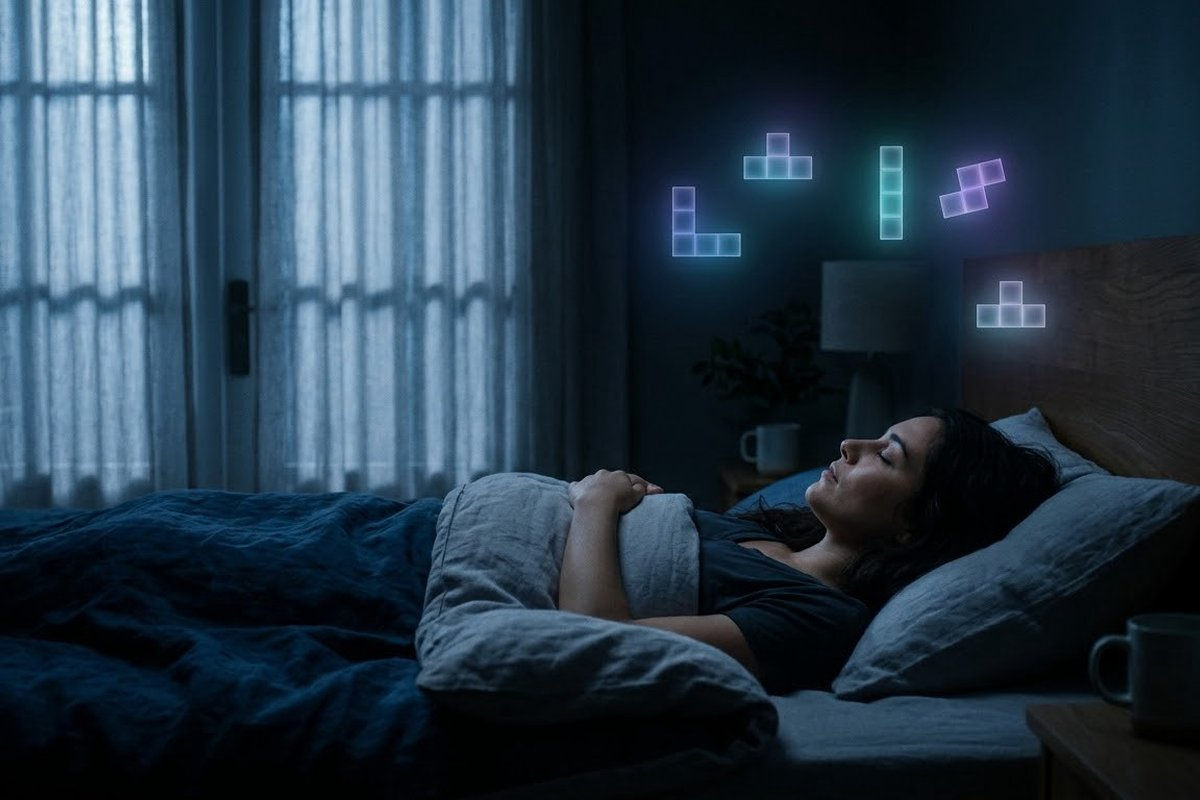
The most famous scientific demonstration came in 2000, when researcher Robert Stickgold and colleagues published a study in Science aptly titled "Replaying the game: Hypnagogic images in normals and amnesics" [1]. Participants played Tetris for hours, then reported what popped into their heads as they drifted off to sleep. Unsurprisingly, most described images of falling and rotating blocks — what scientists call hypnagogic imagery, the dreamlike visuals that flicker through the mind at sleep onset.
Here's the twist that made the study famous: the amnesic participants did it too. These were people with severe memory impairments who couldn't consciously remember playing the game at all. Yet they still reported images of tetrominoes tumbling at sleep onset. That single result showed something big — that the brain replays practiced patterns through a separate, unconscious memory system. Your brain files away skills in a different drawer than the one holding your memories of doing them.
What Happens Inside Your Brain When You Play
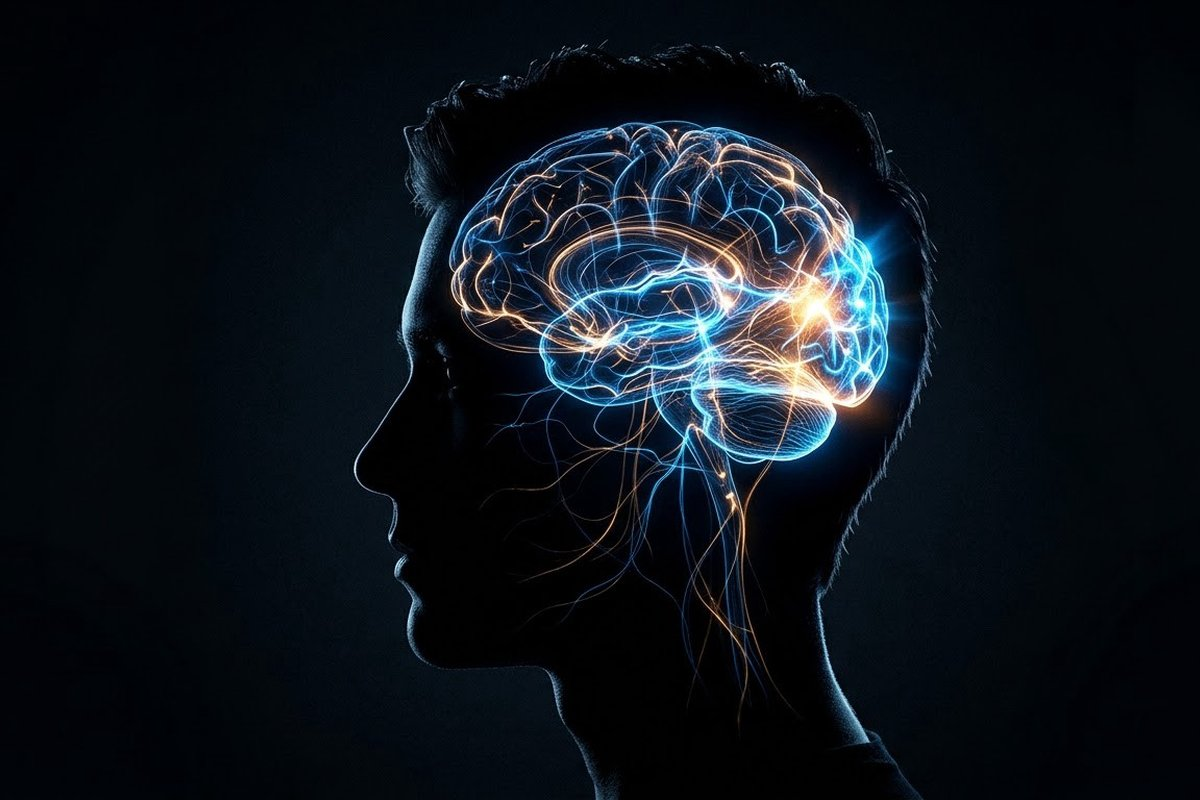
When you play a puzzle like Tetris, your brain isn't doing one thing — it's running a coordinated circuit. The visual cortex processes the shapes and movement. The parietal lobe handles the spatial math: where the piece fits, how it rotates. The prefrontal cortex manages planning and quick decisions under time pressure. Neuroscientists call this combined workload visuospatial processing, and it's one of the most demanding things you can ask your brain to do.
The best evidence for what repeated play changes comes from a 2009 study by Richard Haier and colleagues, who scanned adolescent girls before and after three months of regular Tetris practice [2]. After roughly 1.5 hours a week for 12 weeks, two things happened. First, structural changes: certain regions tied to spatial reasoning and planning showed measurable increases in cortical thickness — the brain tissue literally got denser in areas doing the heavy lifting. Second, and more interesting, the brain got more efficient. Glucose metabolism — the brain's fuel consumption — dropped in those same regions even as performance improved. The players were completing seven times more levels per minute, yet their brains were burning less energy doing it. Researchers call this "neural efficiency": practice lets your brain run the same workload on less fuel.
More recently, a 2021 fMRI study led by Thomas Agren and Emily Holmes's group pinpointed the circuitry involved [5]. When players were instructed to mentally rotate the pieces — rather than just pressing buttons — scans lit up the ventral and dorsal visual streams, the two major highways the brain uses to recognize what things are and where they are in space. This matters because it confirmed that the imagery-competing power of Tetris comes from the visual-spatial demand itself, not just from the button-pressing or the distraction of playing a game.
One honest caveat before we go further: brain changes are not the same thing as "getting smarter." Practicing Tetris reliably makes you better at Tetris and sharper at closely related visual-spatial tasks. Whether those gains transfer broadly to general intelligence is a much weaker claim, and the honest answer from the research on whether brain games deliver real-world benefits so far is "limited" [3]. The Tetris Effect is real and measurable — but it's about how specific skills get wired in, not about upgrading your whole brain.
How the Effect Shows Up in Everyday Life
The classic symptom is the sleep-onset replay: you shut your eyes and the falling blocks appear. For most people this fades after a day or two away from the game, and it's completely harmless — it's your procedural memory system rehearsing while the conscious mind clocks out.
But pay attention, and you'll notice subtler versions during the day. After a serious puzzle streak, the world starts looking stackable. Bookshelves suggest rearrangements. You mentally rotate furniture to see if it fits. You spot the L-shape in a floor tile pattern instantly. Your pattern-detection system has been tuned, and it keeps running in the background on whatever visual input comes next.
This spillover isn't a Tetris quirk — it's how any intensely practiced visual-motor pattern behaves. Typists feel their fingers move during conversations. Rock climbers see handholds in rock faces. Data analysts start noticing the shape of trends everywhere. The common thread is repetition plus engagement: do a patterned task long enough and your brain starts predicting the world through that lens.
The mechanism is neuroplasticity — the brain's habit of strengthening whichever pathways get used most. Repeated practice makes the pattern-recognition circuits fast and efficient (remember that glucose drop from the Haier study), and an efficient circuit doesn't just switch off when the game ends. It keeps firing, coloring your perception and seeding your dreams, until something else becomes more demanding.
The Surprising Upside: Therapy and Habit Science
Here's where the story takes a turn nobody expected. The same mechanism that plants falling blocks in your dreams — the way a visuospatial task occupies the brain's visual imagery bandwidth — has turned out to be clinically useful.
It started with Emily Holmes's lab at Oxford. In a 2010 study, her team showed participants traumatic film footage, then had some of them play Tetris for 12 minutes afterward [3]. Over the following week, the players experienced significantly fewer intrusive flashback memories than controls — and in the team's earlier 2009 experiment, the reduction was around two-thirds. The theory, called task competition, is elegant: traumatic intrusions and Tetris both compete for the same visuospatial resources. Load up that bandwidth right after a traumatic event, and the brain has less capacity to encode the sensory images that later replay as flashbacks.
This line of research went from lab to real world fast. In 2017, a randomized trial in an emergency department had motor vehicle accident victims play Tetris for 20 minutes after standard care; they reported fewer intrusive memories in the following week than patients who received care as usual [6]. During the COVID-19 pandemic, Holmes's group adapted the approach for frontline healthcare workers dealing with trauma flashbacks, with funding from the Wellcome Trust — the intervention pairs a brief memory recall task with 20 minutes of guided Tetris-style mental rotation [4].
There's a craving connection too. In 2014, Jacqueline Andrade and Jon May's team at Plymouth found that a brief session of Tetris reduced the strength, frequency, and vividness of naturally occurring cravings — for food, drinks, cigarettes — by around 24% compared to a control task [7]. The logic is the same as with flashbacks: cravings are heavily imagery-based ("I can almost taste it"), and a visuospatial game crowds out the mental picture that feeds the craving. Three minutes of block-stacking did more than trying to just push the thought away.

To be clear about scope: nobody is prescribing Tetris as a standalone treatment for PTSD or addiction. These are early-stage, adjunct tools studied as one component of broader care [4]. But the direction is remarkable — a 40-year-old puzzle game has become a legitimate research instrument in clinical psychology, precisely because of the effect players noticed decades ago.
How to Put the Tetris Effect to Work for You
You don't need to be in a clinical study to use this. The Tetris Effect is a feature of how brains learn, and you can aim it deliberately.
Train in short daily sessions, not marathons. The replay-at-sleep phenomenon suggests your brain keeps consolidating practiced patterns after you stop. Ten to fifteen minutes of daily play gives your offline processing plenty to work with — and research on skill learning generally favors spaced, frequent practice over one long binge. (This is the same principle behind structured working memory training, by the way.)
Mind the bedtime trade-off. A light puzzle session before bed can seed gentle, pleasant hypnagogic imagery — some people find it relaxing. But an intense, competitive session right before sleep can leave the pattern "live" when you're trying to drift off. If you notice blocks spinning behind your eyelids at 2 a.m., move your session earlier in the day.
Aim the effect, don't just absorb it. Any repetitive visual-spatial activity produces the same soak: mental rotation games, pattern-matching puzzles, memory games, even drawing or typing drills. If you want sharper spatial reasoning, pick puzzles heavy on rotation and fitting. If you want to unwind, pick ones with a calm rhythm — the effect follows the pattern you practice.
Use it as a pattern reset. There's a practical trick hiding in the craving research: a short burst of an absorbing visual puzzle is a legitimate way to interrupt a looping thought or a snack craving. Next time you're doomscrolling or raiding the pantry out of boredom, try three minutes of a fast-paced puzzle instead. That's not just distraction — the research suggests you're out-competing the mental image that feeds the urge.
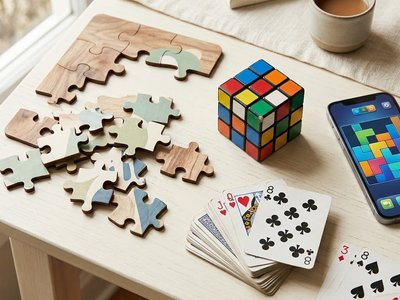
The beauty of the Tetris Effect is that it works with any puzzle, not just Tetris. The core ingredient is a patterned task that fully occupies your visual attention — which describes most of the games on iQiQGame, from memory match to Lights Out.
FAQ
Is the Tetris Effect bad for you? No. Seeing game imagery at sleep onset is harmless and typically fades within a day or two of not playing. It's a normal byproduct of procedural learning, not a warning sign.
Why do I see Tetris blocks when I close my eyes? You're experiencing hypnagogic imagery — your brain replaying a recently practiced visual-spatial pattern as you enter sleep. Stickgold's amnesic-patient study showed this replay runs on an unconscious memory system, so it happens even without conscious recall of playing.
Does the Tetris Effect make you smarter? It reliably improves the trained skill and closely related visual-spatial abilities, and brain-imaging studies show real structural and efficiency changes. But broad transfer to general intelligence is not well supported, so think "specialized upgrade," not "all-systems boost" [3].
Can games other than Tetris cause it? Absolutely. Any repetitive patterned activity — chess, music, typing, driving a new commute, other puzzle games — can produce the same spillover into thoughts and dreams. Tetris just got the naming rights.
Final Thoughts
The Tetris Effect is your brain telling you something encouraging: it keeps working on what you feed it, even after you've closed the laptop. That's neuroplasticity in its most visible, everyday form — and unlike most neuroscience, you can feel it tonight.
So aim it at something useful. Pick one puzzle — a memory match grid, a Lights Out board, a number puzzle — and give it ten focused minutes a day. Your brain will take it from there.
Ready to give your brain its daily pattern workout? Play a quick puzzle on iQiQGame and see what your dreams come up with.
References
- Stickgold, R., Malia, A., Maguire, D., Roddenberry, D., & O'Connor, M. (2000). Replaying the game: Hypnagogic images in normals and amnesics. Science, 290(5490), 350–353.
- Haier, R. J., Karama, S., Leyba, L., & Jung, R. E. (2009). MRI assessment of cortical thickness and functional activity changes in adolescent girls following three months of practice on a visual-spatial task. BMC Research Notes, 2, 174.
- Holmes, E. A., James, E. L., Kilford, E. J., & Deeprose, C. (2010). Key steps in developing a cognitive vaccine against traumatic flashbacks: Visualizing flashbacks and a Tetris video game. PLoS ONE, 5(11), e13706.
- Wellcome Trust. (2022). Mental health tool, which includes Tetris, stops intrusive flashbacks. Wellcome Insights.
- Agren, T., Hoppe, J. M., Singh, L., Holmes, E. A., & Rosén, J. (2021). The neural basis of Tetris gameplay: implicating the role of visuospatial processing. Scientific Reports, 11, 16858.
- Iyadurai, L., Blackwell, S. E., Susser, R., et al. (2018). Preventing intrusive memories after trauma via a brief intervention involving Tetris computer game play in the emergency department. Molecular Psychiatry, 23, 671–675.
- Skorka-Brown, J., Andrade, J., & May, J. (2014). Playing 'Tetris' reduces the strength, frequency and vividness of naturally occurring cravings. Appetite, 76, 161–165.